

Significant reporting errors can raise questions about a bookkeeper’s responsibility, but the consequences of poor bookkeeping go beyond who made the mistake. Inaccurate records can obscure cash flow, complicate tax filings, and leave business owners making decisions without a reliable view of performance.
It’s understandable to focus first on financial damage or possible negligence. Whether a bookkeeper is legally liable depends on the circumstances. The effects on a business, however, may include delayed payments, missed deductions, strained relationships with stakeholders, or growth plans based on incorrect figures.
This article explains how bookkeeping errors affect cash, taxes, business decisions, and trust, and when a bookkeeper’s conduct may raise liability concerns. You’ll also learn practical ways to spot problems early, strengthen your records, and improve financial reporting so you can make decisions with greater confidence.
Key Takeaways
- Assess whether your financial reports match bank activity and the records behind each transaction before relying on them for decisions.
- Keep invoices, expenses, and upcoming obligations current so cash shortages are easier to spot before payments come due.
- Organized, well-categorized records can make tax preparation more reliable and help surface filing issues sooner.
- Use accurate financial results to evaluate pricing, spending, and growth plans instead of relying on incomplete figures.
- Clear records support confidence with employees, suppliers, lenders, and other stakeholders, while the details of bookkeeper liability depend on the circumstances.
1. Can a bookkeeper be liable for negligence if they make significant errors in financial reporting?
A bookkeeper may face a negligence claim when a serious error breaches an agreed responsibility and causes measurable harm. An inaccurate report alone doesn’t establish liability. The key issues are the duty owed, the mistake, its effect, and the supporting evidence. For example, a business owner relying on an incorrect profit report to approve hiring may need to show how the error influenced the decision and caused a loss.
Financial statements inform decisions about pricing, hiring, and expansion. If a contractor records materials as overhead instead of assigning them to a job, the job’s reported margin may be misleading. The owner could repeat underpriced work or cut spending in the wrong area. Accurate accounting gives a clearer picture of performance, while incorrect reports can mislead owners, shareholders, and regulatory authorities.
For U.S. businesses, the IRS expects records that support reported income, expenses, deductions, and credits. Supporting records can include receipts, invoices, deposit information, and payroll documents. Keep them organized so reported amounts can be traced back to transactions.
Disorganized records can also hide internal fraud. For example, when one employee creates vendors, approves payments, and reconciles accounts, independent oversight is limited. Where practical, separate payment approval from reconciliation, review unusual transactions, and retain supporting documents for each payment. These checks make discrepancies easier to investigate and help protect company assets.
Regularly reconcile each business bank account with its accounting records. Compare deposits, checks, electronic payments, and bank fees, then investigate any mismatches. A missing customer deposit or duplicate expense can distort cash and profit reports. Keep a written record of each reconciliation to show what was reviewed and which differences remain unresolved.
Incomplete expense entries can hide potentially eligible deductions, while incorrect categories can make legitimate costs harder to substantiate. For example, record vehicle costs with supporting documentation and classify them consistently. Accurate records help distinguish business expenses from personal spending and make tax preparation or an audit less stressful. An expense isn’t deductible solely because it appears in the books.
To fix disorganized bookkeeping, first gather bank statements, invoices, receipts, payroll records, and prior reports. Then reconcile accounts, correct classifications, document adjustments, and review updated financial statements against source records. A consistent month-end process helps catch errors before they shape business decisions. Monthly bookkeeping records can make those checks part of a reliable routine.
2. Cash flow management problems
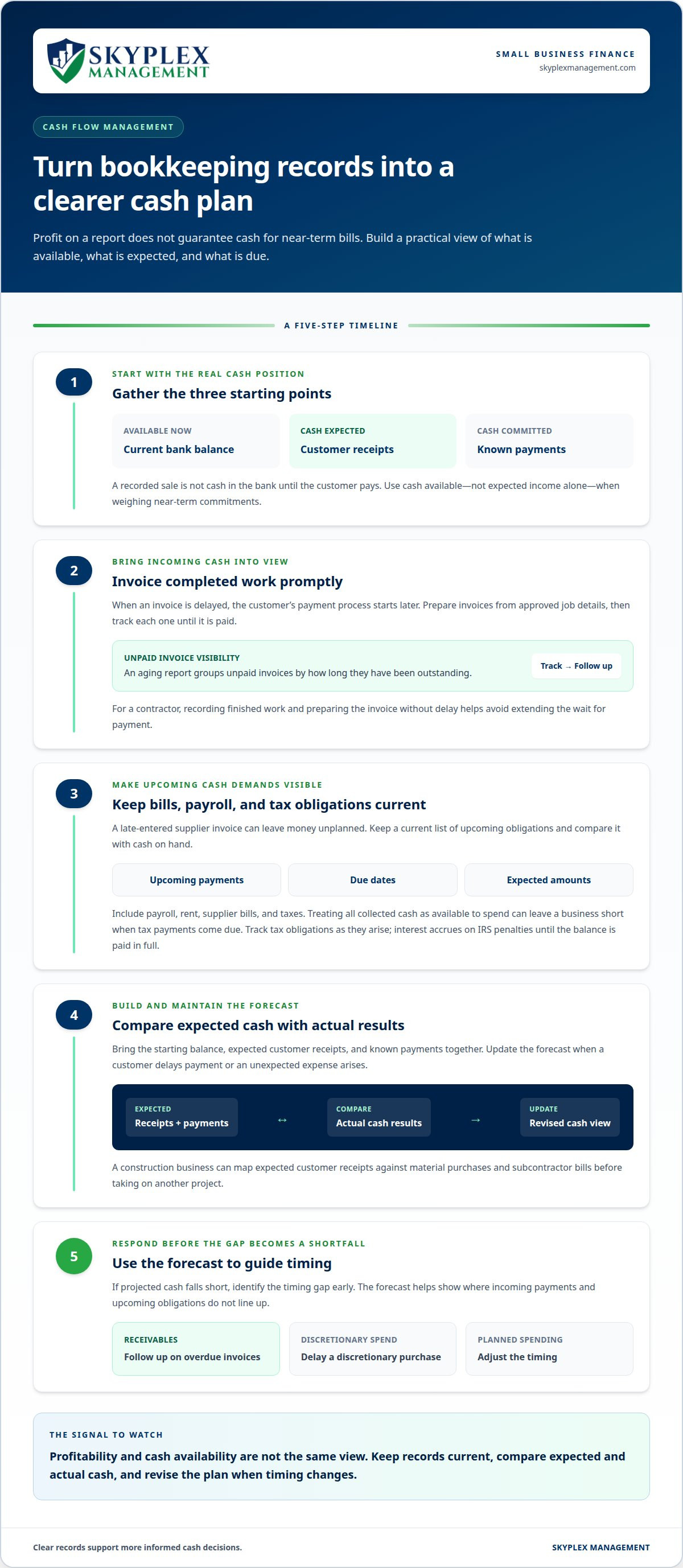
A business can appear profitable on its reports and still lack cash for near-term bills. A recorded sale doesn’t put money in the bank until the customer pays. When financial records lag behind actual activity, owners may commit funds based on expected income rather than cash available. A service company, for example, might schedule new work while invoices remain unpaid.
Delayed invoicing widens that gap. When a contractor finishes a job but waits to prepare the invoice, the customer’s payment process starts later. Record completed work promptly, prepare invoices from approved job details, and track each one until payment arrives. An aging report groups unpaid invoices by how long they’ve been outstanding and helps identify customers who may need a reminder.
Unclear expense and payable records can cause a different cash squeeze. If a supplier invoice is entered late, the owner may not set aside money for it. When payroll, rent, and supplier payments then come due together, the business may face a shortfall, late-payment fees, or overdraft fees. Keep a current list of upcoming obligations, due dates, and expected amounts, and compare it with cash on hand.
Tax liabilities need to be part of that plan. A business that treats all collected cash as available to spend may be caught short when taxes come due. Track tax obligations as they arise and include them in cash planning rather than waiting until filing time. Interest accrues on IRS penalties and increases the amount owed until the balance is paid in full, so resolving the issue late can add to the bill.
A forecast turns scattered financial records into a practical view of what may be available. Start with the current bank balance, expected customer receipts, and known payments. Compare projected cash with actual results, then update the forecast when a customer delays payment or an unexpected expense arises. A construction business, for instance, can map expected customer receipts against material purchases and subcontractor bills before taking on another project.
Use consistent practices to keep the forecast useful: enter transactions promptly, record invoices and bills, and review unpaid balances and upcoming payments together. If projected cash falls short, identify the timing gap early. The business might follow up on overdue invoices, delay a discretionary purchase, or adjust the timing of planned spending. For support turning financial records into a clearer cash plan, discuss your cash flow and reporting needs.
3. Tax filing mistakes, missed deadlines, and penalties
Inaccurate or missing bookkeeping can lead to incorrect tax filings, unpaid balances, penalties, and interest. The IRS charges interest on penalties, increasing the amount owed until the balance is paid in full. The amount at stake depends on the tax issue and what remains unpaid. Incomplete records can make filing errors harder to identify and resolve.
A missed filing deadline can start with a basic recordkeeping gap: sales aren’t fully entered, expenses remain uncategorized, or bank activity hasn’t been matched to the books. The resulting return may omit income or report figures that don’t match supporting documents. Keep records current throughout the year, then compare reported totals with accounting records before preparing a return. If a filing is late or inaccurate, gather the relevant records and address the issue promptly.
Payroll requires particular care because employers must correctly withhold and remit payroll taxes. If payroll reports show different wages or withholding amounts than the books, the discrepancy can affect tax reporting and employee records. Keep payroll reports, payment confirmations, and tax-related entries together. Reconcile payroll activity with accounting records each period, and investigate differences before they carry into later filings.
Expense classification also matters. If a business records a personal purchase as an operating expense, or fails to retain support for a claimed business cost, the tax filing may be difficult to substantiate. Missing vendor information can also disrupt required information reporting, including 1099s; businesses that fail to issue them risk IRS penalties. Use consistent bookkeeping practices, preserve invoices and receipts, and review vendor records before filing.
Incomplete records can complicate more than a tax return. Inconsistent income, expense, or payroll data may contribute to inadvertent violations of tax or reporting requirements, with potential penalties or legal issues. During an audit, missing receipts and mismatched reports can make it harder to explain how a figure was calculated. A clear trail from each return amount to its supporting transaction helps answer questions efficiently.
To reduce filing problems, close the books before tax preparation, reconcile accounts, review payroll totals, and flag missing documents. Compare year-end reports with source records, then list unresolved items for follow-up instead of guessing at amounts. If you find an error, preserve the original records and document every correction. Regular reviews make inaccurate entries easier to catch before filing, while organized records help explain reported figures to tax authorities.
4. Missed growth and expansion opportunities
Growth decisions depend on financial data showing what a business earns, spends, and can sustain. If reports omit expenses or misclassify costs, an owner may mistake revenue for available profit. A service company considering another technician, for example, needs to understand payroll costs, customer demand, and current margins before adding the role. Incomplete records can turn the decision into guesswork.
Accurate financial reports help owners compare results with plans and spot patterns. Review reports weekly, monthly, quarterly, and annually to see whether sales, expenses, and profitability are moving as expected. A contractor might compare job costs across completed projects and discover that material overruns are eroding margins. That insight can inform estimates, purchasing decisions, and which work to pursue.
Without current records, budgets can carry old errors forward. If a business builds its next budget using expenses entered late or left out, planned spending may not reflect actual operating needs. Compare budgeted figures with recorded results, investigate meaningful differences, and update assumptions when customer demand or supplier costs change. This gives owners a more useful view of financial health before they commit to expansion.
Growth can also stall when records don’t show which products, services, or customer groups contribute most to earnings. Where the accounting system supports it, separate income and costs by job, service line, or location. A repair shop, for instance, can compare labor and parts revenue with related costs. Clear categories help owners decide where to focus staff time, adjust pricing, or reduce avoidable spending.
Tax deductions can affect the funds available for reinvestment. When receipts or expense details are missing, an owner may overlook a potentially eligible business expense or lack documentation to support its treatment. Record each cost promptly, keep the invoice or receipt, and use consistent categories. Review these records during tax preparation so filing deadlines don’t arrive before key expenses are identified and organized.
Missed tax deadlines can also consume attention needed for planning. If incomplete books delay preparation, owners may spend time reconstructing transactions instead of evaluating a new location, equipment purchase, or hiring plan. A year-round close process helps organize records before filing season and surfaces missing information earlier. Keep a calendar of filing obligations and assign responsibility for gathering the records each return requires.
Before approving a major investment, review current reports: estimate the new costs, identify the expected revenue source, and compare both with existing commitments. Then check whether recent results support your assumptions. Financial Reporting & Advisory can help turn accurate financial data into a clearer view of performance, so expansion plans are based on documented results rather than incomplete records.
5. Business reputation and stakeholder trust
Customers, suppliers, lenders, and employees all rely on a business to keep its commitments. If inaccurate statements show revenue that hasn’t been collected or omit expenses, owners may approve payments or purchases the business can’t support. For example, a supplier who repeatedly receives late payments may tighten terms, making it harder to maintain dependable inventory or service.
Unclear financial reports can also affect borrowing. Financial institutions use business records to assess stability and creditworthiness before approving loans. If a lender sees statements that don’t align with bank activity, revenue records, or supporting documents, it may have difficulty evaluating the application. Organized records help explain how the business earns income, manages obligations, and generates profit.
Prepare for a financing discussion by gathering current income statements, balance sheets, bank records, and explanations for unusual changes. An income statement summarizes revenue, expenses, and profit over a period; a balance sheet shows assets, liabilities, and equity at a point in time. Check that each report agrees with the underlying records before sharing it. Clear documentation makes questions easier to answer.
Errors can undermine decisions inside the business, too. If a report overstates profit, an owner might increase hiring or approve a purchase without accounting for outstanding bills. If revenue is understated, the business might delay a useful investment or cut staff unnecessarily. Compare reports with actual bank activity and investigate significant differences before making decisions about payroll, pricing, or expansion.
Trust also matters during ownership changes. A potential buyer needs financial records that explain revenue, expenses, assets, and obligations. If categories change without explanation or statements contain unexplained adjustments, the buyer may need more time to understand performance. Keep supporting records together and document corrections so the financial history is easier to follow during a sale discussion.
Build a practical review routine: confirm reports use consistent categories, investigate unusual balances, and keep explanations with supporting documents. Share relevant results with decision-makers, including managers responsible for budgets or purchasing. If a supplier questions a payment or a lender asks about a variance, respond with the transaction record and a clear explanation rather than estimates. Consistency helps protect working relationships and gives owners a more dependable basis for decisions.
For a clear review of your business records and reports, discuss your bookkeeping needs.
Skyplex Management: Small Business Bookkeeping
Skyplex Management supports small businesses across Northeast Ohio with Small Business Bookkeeping and Small Business Accounting. Turn to the team when transactions are behind, reports don’t provide a clear picture, or you need consistent records to support day-to-day decisions.
For QuickBooks issues, Skyplex Management’s QuickBooks Services include setup, bookkeeping, guidance, and training to help organize your accounts and records. Payroll Service and outsourced accounting and controller support can also help manage your financial operations as your needs change. With complete, current books, you can review cash activity, understand business performance, and prepare more confidently for tax filing and planning.
If bookkeeping issues are affecting your decisions or taking time away from running your business, contact Skyplex Management to discuss the support that fits your needs.
Build a Stronger Financial Routine
Better bookkeeping starts with a routine your team can maintain, even during busy periods. Set a regular time to review records, assign clear responsibility for outstanding tasks, and document how corrections are handled. A consistent process helps keep financial information useful as your business changes.
The consequences of poor bookkeeping can linger if you fix records once but leave the underlying routine unclear. Treat cleanup as a starting point: identify the gaps, decide who owns each recurring task, and set expectations for how information moves from daily transactions into reports. This gives your next decisions a more dependable foundation.
If you’re ready to discuss a practical next step for your business, reach out to Skyplex Management.
With a clearer process in place, you can move forward with greater focus and confidence.
Frequently Asked Questions
Can a bookkeeper be liable for negligence if they make significant errors in financial reporting?
Potentially, but liability isn’t automatic. Start by identifying the work assigned under the engagement and the reports delivered. Preserve the original report, revised versions, dates, requests, and messages, then note the related transaction records. If a business decision followed, document what was decided and when. A clear timeline helps distinguish a source-data issue from an entry or review error and supports a more informed assessment of responsibility.
What are the Major Consequences of Bad Bookkeeping?
Major consequences include unreliable operating decisions, time spent reconstructing records, filing complications, strained relationships, and difficulty demonstrating business performance. To prioritize, create an issue log showing the affected account, the first known date, any related decision or filing, and whether supporting documents exist. This turns a broad bookkeeping concern into a workable correction queue, starting with items that affect open commitments or submitted returns.
What are the main consequences of poor bookkeeping for a small business?
For a small business, bookkeeping problems can pull owners and staff away from serving customers. An owner might spend evenings identifying card purchases while a manager postpones routine purchasing decisions. That lost attention can be especially disruptive when one person handles sales, operations, and administration. List recurring finance tasks that are postponed, assign someone to each, and schedule them so bookkeeping doesn’t compete with daily emergencies.
How can poor bookkeeping lead to cash flow problems or business failure?
Poor bookkeeping can contribute to business failure, but it doesn’t mean a business will fail. Problems can compound when decisions repeatedly rely on misleading information. For example, a retailer may keep ordering slow-moving products while popular items remain unavailable. Review aged inventory, canceled orders, and customer concentration together. These operating signals can reveal pressure points that a profit figure alone may not show, helping owners adjust purchasing before problems deepen.
How can poor bookkeeping cause missed deductions or incorrect tax returns?
Incomplete classifications can lead to omitted expenses or inconsistent tax reporting. Before filing, compare the trial balance with the prior-year return and flag unusual category changes or accounts that lack detail. For each flagged expense, connect the entry to its business purpose and supporting document. This review helps identify questions for tax preparation without assuming every recorded expense qualifies for a deduction.
What financial reports and business decisions are affected by inaccurate books?
Inaccurate books can affect income statements, balance sheets, cash flow reports, and aged-receivable reports. The decision at risk depends on the figure: inventory values can distort reorder planning, while customer balances can misdirect collection efforts. Look beyond bottom-line profit by reviewing the schedules behind each report. Compare relevant figures with operational records, such as sales tickets or completed work orders, to find mismatches worth investigating.
How does poor bookkeeping make it harder to get a business loan or attract investors?
Unclear books can make it harder for a reviewer to distinguish recurring results from one-time transactions. Prepare notes explaining unusual owner contributions, withdrawals, asset purchases, or debt payments, and show where they appear in the statements. Keep reports consistent across the periods being compared. Clear explanations help lenders or investors understand the financial picture without overstating performance or leaving unusual activity unexplained.
Can poor bookkeeping lead to fraud, theft, or inaccurate financial statements?
Yes. Incomplete records can conceal theft, and ordinary entry mistakes can also make statements inaccurate. Review exceptions that differ from normal activity, such as changed vendor payment details, duplicate invoice references, or unusual payroll changes. Record who reviewed each exception, when it was reviewed, and how it was resolved. This focused review adds accountability without requiring owners to recheck every routine transaction.
Disclaimer
The information provided in this article is for general educational purposes only and should not be considered accounting, tax, or legal advice. Every business is unique. Consult a qualified accounting professional before making financial or tax decisions. Contact Skyplex Management for guidance specific to your business.


