

Accounting software can record transactions and generate reports, but it can’t replace careful bookkeeping or professional judgment. The risks of DIY small business accounting include miscategorized expenses, missed deadlines, and records that don’t reflect your actual cash position. Without regular review, errors can go unnoticed.
Software can simplify routine tasks and keep financial information in one place. The key is knowing where automation stops and accurate setup, reconciliation, and interpretation begin.
This article explains where DIY bookkeeping can fall short, when support may help, and how software compares with professional guidance. You’ll also learn why timely, reliable records matter for tax preparation, payroll, cash flow, and everyday business decisions.
Key Takeaways
- Review transaction categories and reconcile accounts regularly so errors are easier to spot before they affect reports or tax preparation.
- Use financial statements to understand your business’s position before sharing them with lenders or investors.
- Consider bookkeeping support when records fall behind, cash flow becomes harder to predict, or payroll and invoicing take time away from running the business.
- Accounting software can organize transactions and generate reports, but accurate setup, coding, reconciliation, and interpretation still matter.
- Keep organized records and track filing deadlines to reduce the risk of missed deductions and avoidable tax complications.
1. What are the risks of DIY accounting for small businesses?
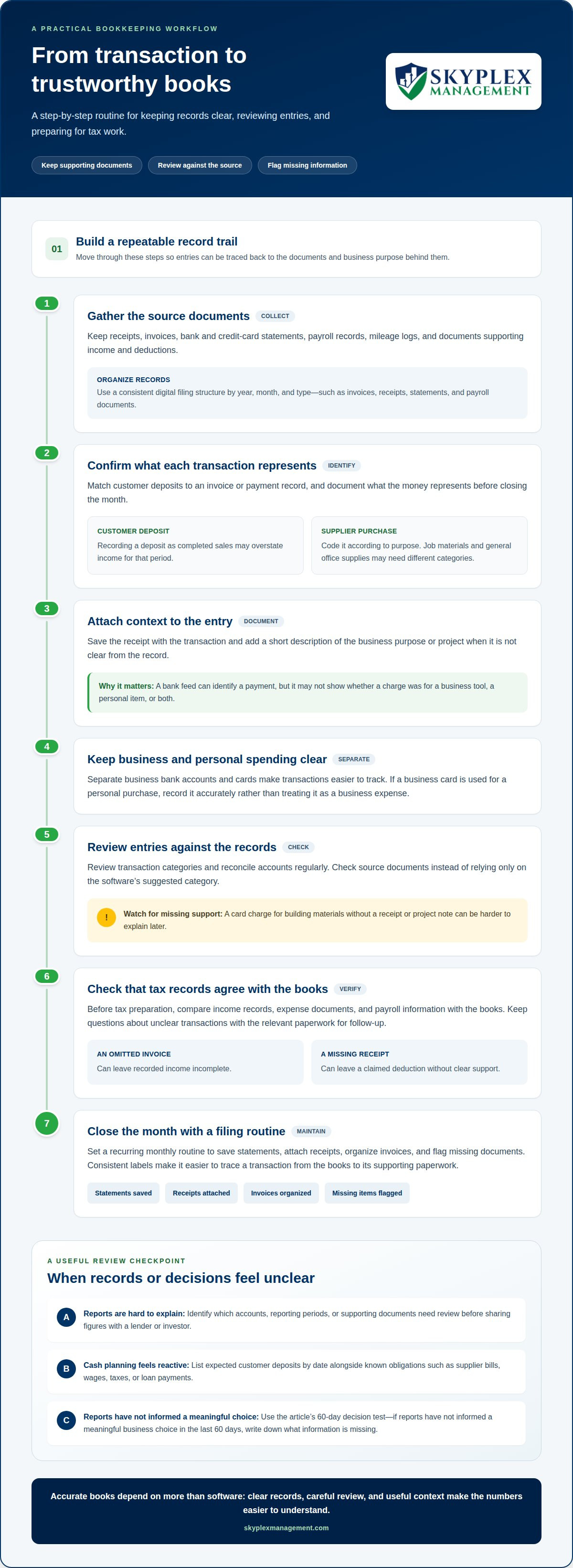
Keep receipts, invoices, bank and credit-card statements, payroll records, mileage logs, and documents supporting income and deductions. For U.S. taxes, retain each record for the period that applies to its document type and filed return. Don’t assume one retention period fits every receipt or situation.
Transaction coding errors can quietly distort a business’s books. For example, recording a customer deposit as completed sales may overstate income for that period. Match each deposit to its invoice or payment record, and document what the money represents before closing the month.
Likewise, code a supplier purchase according to its business purpose. Materials purchased for a customer job, for instance, shouldn’t be grouped with general office supplies if you need to understand job costs. Keep the invoice and a short description with the entry.
Review records against source documents, not just the software’s suggested category. A bank feed can identify a payment, but it can’t tell whether the charge was for a business tool, a personal item, or both. Add a note when the description alone doesn’t explain the transaction.
Gaps in recordkeeping make later review harder. A contractor might have a card charge for building materials but no receipt connecting it to a project. Save the receipt with the transaction and note the job or business purpose. Organized documentation helps explain why an expense appears in the books.
Mixing personal and business spending creates similar confusion. If you use a business card for a personal purchase, keep the receipt and record the transaction accurately rather than treating it as a business expense. Separate business bank accounts and cards make transactions easier to track.
Before tax preparation, check that income records, expense documents, and payroll information agree with the books. An omitted invoice can leave recorded income incomplete; a missing receipt can leave a claimed deduction without clear support. Keep questions about unclear transactions with the relevant paperwork for follow-up.
Deadlines are easier to miss when records are scattered across email, paper folders, and banking apps. Set a recurring monthly filing routine: save statements, attach receipts, organize invoices, and flag missing documents. This makes it easier to gather tax information without reconstructing the year from old messages.
For a practical filing system, organize digital records by year, month, and type, such as invoices, receipts, statements, and payroll documents. Use consistent labels so a transaction can be traced from the books to its supporting paperwork. Small business financial and tax guidance can help you build a more consistent records routine.
Keep receipts, invoices, bank and credit-card statements, payroll records, mileage logs, and documents supporting income and deductions. Retain each record for the period that applies to its document type and filed return.
2. When should a small business consider bookkeeping support?
Consider support when your financial reports no longer help you explain how the business is performing. A lender reviewing a financing request may compare reported revenue, expenses, assets, and debts. If figures shift between reports or you can’t explain a change, pause before sharing them. First identify which accounts, reporting periods, or supporting documents need review.
You can handle straightforward tasks consistently, such as organizing receipts, issuing invoices, and entering familiar transactions. Correcting old balances, preparing reliable financial statements, or reviewing complex payroll entries may call for accounting support. Keep control of business decisions while delegating technical work that regularly delays accurate reports.
Cash-flow visibility matters because a bank balance doesn’t show every upcoming commitment. You may have funds available today while customer invoices remain unpaid and supplier bills, wages, taxes, or loan payments are approaching. Build a simple cash-flow schedule that lists expected deposits by date alongside known obligations. Update it as customer payment timing changes.
That schedule can reveal a shortfall before it affects operations. For example, a company expecting a large customer payment after payroll is due may need to adjust purchasing or follow up on the invoice sooner. Review timing, not just totals. A forecast is useful when it reflects realistic collection dates and planned payments.
Financial statements help you compare actual results with plans. Check whether revenue is tracking against expectations, whether expenses have changed, and whether the business can support a planned hire. If the numbers don’t answer those questions, inspect the report’s date range and account categories before relying on it.
Use a decision test: have your reports informed a meaningful business choice in the last 60 days? If not, write down the missing information. A contractor may need to know whether a proposed bid covers expected labor and materials; a service firm may need to compare revenue by service line. The useful report depends on the decision at hand.
Lenders and investors need consistent financial information to assess performance and obligations. Before a financing conversation, make sure report figures agree with the records behind them. Prepare to explain unusual changes, such as a one-time equipment purchase or a delayed customer payment, so readers can understand what shaped the results.
Support is worth considering when reports remain unclear, cash planning feels reactive, or an important financing decision is approaching. A focused review can identify whether the main need is cleaner records, more useful reporting, or a reliable forecasting process. If you want help deciding which bookkeeping tasks to delegate, discuss your reporting and bookkeeping needs.
3. Is outsourced bookkeeping a good idea for small companies?
Outsourced bookkeeping can be a good fit when the work has outgrown your available time or accounting experience. Owners often start doing the books themselves to monitor spending closely and avoid another hire. That can work while transactions are straightforward, records stay current, and you can explain the numbers behind each report.
Watch for signs that the process is slipping. Supplier invoices may sit unpaid because they haven’t been entered, customer invoices may go untracked, or you may not know which records are complete. These are practical signals to assess your workflow, not reasons to abandon oversight. List the recurring tasks that keep getting postponed.
DIY bookkeeping can consume several hours each week. Track time spent sorting transactions, following up on invoices, and researching bookkeeping questions. Then compare that workload with the time you need for customer service, sales, job estimates, or managing employees. The tradeoff becomes clearer when you see which business activities are being displaced.
Another warning sign is having to reconstruct what happened before making routine decisions. For example, a repair shop may need to know whether parts purchases are matched with completed customer work. If you can’t connect the available numbers to your operations, your reporting may need better structure or more consistent review.
Outsourced bookkeeping can provide access to bookkeeping, accounting, and controller expertise without hiring each role as an employee. Bookkeeping support can maintain transaction records, while controller-level review can help interpret results and plan cash flow. You can get the level of assistance your business needs without building a full accounting department.
That flexibility can matter as your business grows. A service company may first need current books and clear reports, then later need help analyzing costs or preparing forecasts. Outsourced accounting can include controller oversight and financial planning as needs change, while you continue to provide details about customers, projects, and operations.
Delaying help can make a cleanup more demanding. Correcting poor DIY records late may cost hundreds or thousands, depending on the extent of the errors and how they’re addressed. Start by identifying unreconciled accounts, unclear balances, or missing invoice details, then determine which period needs attention first.
Before choosing an arrangement, write down the tasks you want handled and the information you need to make decisions. A contractor, for instance, may need job costs organized, while a consulting firm may need reliable expense and revenue reporting. Clear priorities help define a useful working relationship and keep you involved in decisions without carrying every bookkeeping task alone.
4. Accounting software versus professional advice
Accounting software can record transactions, track expenses, create invoices, and generate reports. It can also automate bank feeds and suggest transaction categories. But software doesn’t interpret the numbers in the context of your goals, business model, or accounting needs.
There isn’t one cost that applies to every software setup or bookkeeping arrangement. The price depends on the specific needs involved; software features, users, payroll needs, transaction volume, and the level of professional review shape the comparison.
You can use software to enter routine transactions and send customer invoices. The important step is reviewing what the system records. For example, a suggested category might mislabel a contractor’s materials as office supplies, making job costs and reports less useful.
Setup affects every report that follows. Choose account categories that match your business, connect the correct bank and credit-card accounts, and enter opening balances carefully. Then review transaction matches and reconcile account balances against statements. A bank feed can save data-entry time, but it can’t determine a transaction’s business purpose.
Payroll shows where automation needs oversight. Software can organize employee pay information and record payroll transactions, but someone still needs to review the inputs and resulting entries. If wages, deductions, or payroll liabilities are recorded incorrectly, financial reports can show inaccurate labor costs.
Software also can’t explain why results changed. A report might show lower cash or rising expenses, but you must investigate the underlying transactions and timing. A professional can help interpret the figures, identify patterns, and connect them to decisions such as hiring, pricing, or managing cash flow.
For a growing business, use software for consistent recordkeeping and professional advice for review and interpretation. A CPA can review the books and advise on tax matters, while bookkeeping support can help keep transactions organized and accounts reconciled. These roles can complement the software rather than replace it.
Before relying on a report, try a practical review: confirm its date range, check that recent transactions are categorized, compare account balances with statements, and investigate unusual amounts. Then ask whether the report answers a real business question, such as whether payroll fits current revenue.
Software alone may suit a simple operation when you have time to maintain and review the records. If setup is unclear, reports conflict with account balances, or payroll entries create stress, professional oversight can help improve the process. The right mix depends on transaction complexity, available time, and the decisions your records need to support.
There is no single cost for software or professional bookkeeping; the comparison depends on software features, users, payroll needs, transaction volume, and the level of professional review. The price is provided after a quote request.
5. Missed deductions and filing deadlines
DIY records can make it harder to identify deductible business expenses. A receipt filed without a clear business purpose may be difficult to connect to the related transaction later. Keep invoices, payment evidence, and a short note together, then review expense categories before tax preparation.
For example, a service business might pay for tools, software, or job supplies across several accounts. If purchases are coded inconsistently, you may overlook legitimate expenses when reviewing the year’s income. Compare transaction details with receipts and business activity, and flag unclear items for review rather than guessing.
Filing deadlines are harder to manage when bookkeeping falls behind. Tax information may depend on complete income, expense, and payroll records, so missing documents can delay preparation. Keep a calendar of applicable filing dates and assign someone to gather records before each deadline. Tax requirements can vary by state, including sales tax and payroll matters.
A late filing may result in fines, penalties, or interest charges. Rushing near a deadline can also lead to errors, such as omitted income or expenses placed in the wrong category. Set a recurring monthly process to update records, review unusual transactions, and identify missing statements well before tax preparation begins.
Tax rules can change, so relying on an old checklist is risky. Review the current filing requirements that apply to your business and location, then keep related correspondence with your tax records. If your business operates across state lines or changes how it pays workers, those changes may affect which records and filings need attention.
Missed deductions are only one consequence of incomplete books. Outdated figures can also hide a change in profit or make it difficult to decide whether your business can afford new equipment, added staff, or expanded services. Before committing, compare current income and expenses with upcoming obligations and expected customer payments.
Use a practical closeout routine: match transactions to receipts, review income against invoices, check payroll records, and note missing documents. Keep a separate list of questions for tax preparation, such as whether a particular purchase had a business purpose. This turns scattered paperwork into information that can be reviewed instead of reconstructed under pressure.
Consistent records also help you spot growth opportunities earlier. If a profitable service is buried among broad expense categories, you may miss a chance to focus sales or adjust your schedule. Clear reporting makes it easier to compare services, understand costs, and plan using current financial information.
Skyplex Management: Small Business Bookkeeping
Skyplex Management helps small business owners keep books organized and financial information useful. Turn to its Small Business Bookkeeping or Small Business Accounting when transaction reviews, monthly records, or reporting are taking time away from running your business.
If QuickBooks Online records need correction or have fallen behind, QuickBooks Online Support & Cleanup can help restore a more dependable foundation. Payroll Service supports payroll processing and reduces the administrative load of managing employee pay.
The right support depends on where your process is getting stuck. You might need help catching up on transactions, improving how records are maintained, or organizing payroll information. Contact Skyplex Management to discuss bookkeeping support that fits your business.
Build a bookkeeping process that supports your next move
The risks of DIY small business accounting become harder to manage when records can’t keep pace with your business. Your next step doesn’t need to be a complete overhaul. Start by identifying the accounting task that creates the most friction, such as catching up on entries, understanding reports, or organizing QuickBooks Online.
Skyplex Management offers Small Business Bookkeeping, Small Business Accounting, and QuickBooks Online Support & Cleanup. The right support can help you build a more dependable process while keeping your attention on customers, employees, and business decisions.
Think about what you want your financial records to help you do next. A clearer process can make it easier to plan with confidence and move forward steadily.
A manageable next step can bring more clarity to the work ahead.
Frequently Asked Questions
Can DIY accounting software replace a bookkeeper?
No. Software can organize transactions and create reports, but it can’t take responsibility for reviewing how entries affect your books. For example, a customer deposit might include payment for work not yet completed, so its treatment needs context. Use software for routine invoicing and expense entry, then get help with setup, unusual transactions, cleanup, or records that no longer make sense.
Is DIY Bookkeeping Really Saving Your Business Money?
Not necessarily. Consider the time you spend learning the system, correcting entries, and gathering documents alongside the value of work set aside. Then consider whether an error could affect a decision or require extensive cleanup. To assess the tradeoff, track bookkeeping hours and recurring problems, then compare those demands with the support needed to keep records useful.
Is outsourced bookkeeping a good idea for small companies?
It can be a practical option when bookkeeping tasks have become inconsistent or take attention from customer work. For example, a shop adding service lines may need clearer expense categories to understand which work is performing well. Outsourced support can organize records and provide accounting oversight without requiring you to manage every entry. You still supply context and review decisions based on the reports.
What are some common bookkeeping blunders that I can try to avoid when doing my own bookkeeping?
Common blunders include recording a vendor bill twice, leaving a customer refund out of the books, and treating a personal withdrawal as a business expense. Create a consistent process: review source documents, check for duplicate amounts, and assign transactions to the right account. If an entry is unclear, keep its supporting paperwork and note the question rather than choosing a category at random.
What are the risks of DIY accounting for small businesses?
The risks of DIY small business accounting include unreliable reports, missed expenses, and decisions based on incomplete records. For example, a profit report may not account for unpaid customer invoices or bills that haven’t been entered. That can make available cash look stronger than it is. Pair reports with current account balances and a list of outstanding obligations before making spending or hiring decisions.
What are the risks of DIY bookkeeping?
DIY bookkeeping can leave errors unnoticed when one person enters transactions and prepares reports without independent review. That weak separation can also make unauthorized or mistaken activity harder to spot. Keep source documents, limit financial account access to appropriate users, and review changes to vendor details or payment instructions. Even a periodic second-person review can add useful oversight for a small team.
When should a small business consider bookkeeping support?
Consider support when you can’t explain a balance, a lender requests reports you can’t confidently provide, or a new employee adds payroll work you struggle to manage. Another signal is repeatedly postponing bookkeeping because urgent customer needs take priority. List the tasks causing delays and the decisions waiting on reliable figures. That list helps define whether you need ongoing assistance, cleanup, or accounting guidance.
Why is hiring a professional accountant better than DIY bookkeeping?
A professional can apply accounting judgment to situations routine data entry can’t resolve, such as correcting an opening balance or interpreting a financial report. That support can be especially useful when business activity changes and old categories no longer describe the work. Skyplex Management provides Small Business Accounting and Small Business Bookkeeping to help owners organize records and make better use of financial information.
Disclaimer
The information provided in this article is for general educational purposes only and should not be considered accounting, tax, or legal advice. Every business is unique. Consult a qualified accounting professional before making financial or tax decisions. Contact Skyplex Management for guidance specific to your business.


