

When you’re deciding what to do when your accountant makes a mistake, start by tracing the numbers, not assigning blame. A discrepancy can point to an error, but it may also result from timing, a missing document, or a transaction recorded in the wrong account. It’s reasonable to be concerned about tax filings, payroll, cash flow, or reports you rely on to make decisions.
Before making changes, compare your bookkeeping with source documents such as bank statements, receipts, invoices, payroll records, and tax filings. A clear paper trail helps confirm what happened and prevents a correction from creating another problem. If records are incomplete or inconsistent, organize what you have and note what still needs to be found.
This guide explains how to verify a suspected accounting error, assess its possible impact, and document a correction plan with clear responsibilities. You’ll also learn how to restore reliable records and when QuickBooks Online cleanup, ongoing bookkeeping, payroll management, or controller support can help. The goal is a practical path from uncertainty to a clearer financial picture.
Key Takeaways
- To decide what to do when your accountant makes a mistake, preserve the records and compare the discrepancy with supporting documents first.
- Use a neutral, evidence-based message to request an explanation, a correction plan, and clear responsibility for each follow-up step.
- Choose between a routine correction, an independent records review, a professional transition, or an official complaint based on the evidence and impact.
- Keep source documents, reports, filings, reconciliations, and written communications organized while the issue is being resolved.
- Build more reliable bookkeeping and payroll workflows with regular reviews, clear roles, and documented approvals.
Accountant Mistakes: Confirm the Facts First
A discrepancy in your books can be unsettling, especially if it could affect payroll, taxes, cash flow, or a report you rely on. Verify the facts before assigning blame or changing records. Preserve the original information, compare it with supporting evidence, describe exactly what differs, and keep a record of each follow-up. This gives you a sound basis for deciding what to do when your accountant makes a mistake.
An accounting error is a record or calculation that doesn’t agree with the available source evidence. Keep your initial review focused on what can be checked. Accountants handle records and financial information in different ways, as outlined in this general overview of the Accountant profession. First identify the specific entry, report, or calculation in question.
How to verify a suspected accounting error
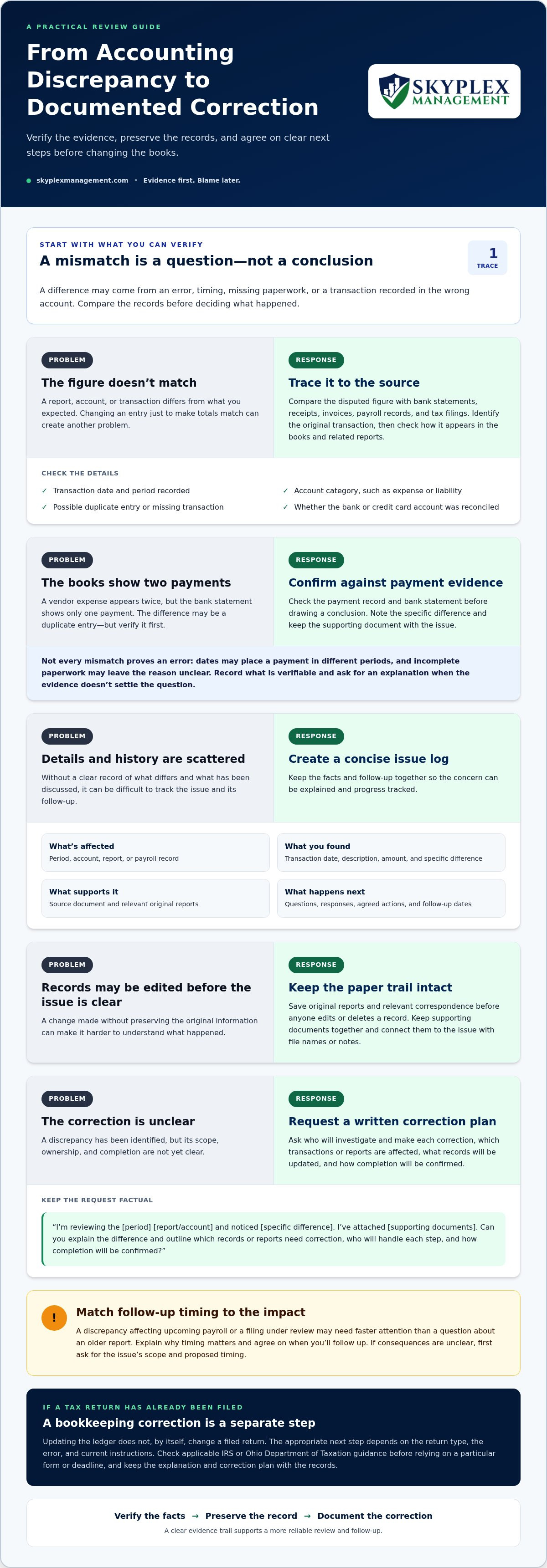
Trace the disputed figure back to the original transaction, then check how it appears in the books and related reports. Compare invoices, receipts, bank activity, payroll records, and prior reports. Check:
- The transaction date and the period in which it was recorded.
- The account category used, such as an expense or liability account.
- Whether an entry is duplicated or a transaction is missing.
- Whether the relevant bank or credit card account has been reconciled, meaning its recorded balance has been compared with the statement.
For example, if one vendor payment appears twice in the expense records but only once on the bank statement, a duplicate entry may explain the difference. Confirm it against the payment record before drawing a conclusion. A bookkeeping review can help trace discrepancies through transaction records and reconciliations.
Not every mismatch proves an error. A payment may appear in one period in the bank feed and another in a report because the dates differ. A classification may reflect a judgment about which account best describes a transaction, while incomplete paperwork may leave the reason unclear. Record what you can verify and ask for an explanation when the evidence doesn’t settle the question. Don’t change an entry simply to make two totals match.
What to document before raising the issue
Make a concise issue log so you can explain the concern and track what happens next. Include:
- The affected period and account, report, or payroll record.
- The transaction date, description, and amount.
- The supporting document and the specific difference you found.
- Your questions, responses, agreed actions, and follow-up dates.
Save the original reports and relevant correspondence before anyone edits or deletes a record. Keep supporting documents together, with file names or notes that connect them to the issue. For businesses in Northeast Ohio, use the records themselves to establish what happened rather than relying on assumptions. A factual record makes it easier to discuss the discrepancy and identify the right next step.
How to Ask Your Accountant to Correct the Error
Once you’ve identified a discrepancy, keep the first conversation factual and focused on resolution. A clear written request gives your accountant an opportunity to explain what happened and creates a record of the proposed next steps. The initial goal is to understand the issue, its scope, and how the records will be corrected.
What to include in a correction request
Identify the affected report, account, transaction, or payroll period. Describe what you expected to see and what appears instead. Attach relevant supporting documents, and note any other reports that may rely on the same information. For example, a payroll entry that doesn’t match payroll records may also affect a payroll liability balance or financial report. Ask for an explanation before assuming which records need adjustment.
Request a written correction plan that answers practical questions:
- Who will investigate the discrepancy and make each correction?
- Which transactions, periods, accounts, or reports are affected?
- What records will be updated, and how will the changes be documented?
- How will you know the work is complete, such as through an updated report or reconciliation?
Set a response date that reflects the issue’s urgency. A discrepancy affecting upcoming payroll or a filing under review may need faster attention than a question about an older report. Explain why timing matters, but don’t invent a legal deadline. If the consequences are unclear, ask for an initial explanation of the scope and proposed timing, then agree on when you’ll follow up.
Keep the tone direct and neutral. You might write: “I’m reviewing the [period] [report/account] and noticed [specific difference]. I’ve attached [supporting documents]. Can you explain the difference and outline which records or reports need correction, who will handle each step, and how completion will be confirmed?” This keeps the exchange specific and actionable.
When the correction affects a filed tax return
A bookkeeping correction and a tax-return correction are separate steps. Updating the ledger doesn’t, by itself, change a return that has already been filed. The appropriate next step depends on the type of return, the error, and current instructions. Check the latest guidance from the IRS or the Ohio Department of Taxation that applies to the filing before relying on a particular form or deadline. Keep the accountant’s explanation and correction plan with the related tax records.
If you need steadier accounting oversight after resolving the issue, small business accounting services can support consistent review of financial records and reports. For help understanding your records and planning next steps, contact Skyplex Management. Clear responsibilities and written confirmation can help you work out what to do when your accountant makes a mistake without rushing into changes that create more confusion.
Correction, Escalation, or a New Accountant: How to Choose the Next Step
There isn’t one right response to every accounting discrepancy. The next step depends on what the records show, whether the issue has happened before, how clearly it’s being addressed, and whether you can access the information needed to keep your business operating. One error alone doesn’t establish fraud, negligence, or automatic financial liability. Weigh the evidence and the response, then choose a path that protects accurate records.
Routine correction: A specific, isolated issue is explained, corrected, and documented. Confirm the fix and consider whether the same process affected related records.
Independent record review: The cause or scope remains unclear, or similar discrepancies may appear in other periods. A separate review of bookkeeping records can help identify patterns and items that need attention.
Professional transition: Repeated unexplained issues, communication problems, or difficulty accessing business records may signal that your current arrangement isn’t meeting your needs. Secure your records and plan for continuity before changing responsibilities.
Official complaint: Consider this route when the facts may involve conduct covered by a regulator’s process, rather than a disagreement about a routine bookkeeping entry. Review the agency’s current guidance to determine whether the situation fits.
Compare these options using five factors: the strength of your supporting records, whether errors recur, whether explanations are clear and consistent, whether you can access your financial files, and whether a filed tax return or other filing could be affected. If a filing may be involved, confirm the issue and consult current IRS or Ohio Department of Taxation instructions before deciding what action is appropriate. Don’t assume that a corrected bookkeeping entry also resolves a filing.
When a correction and closer review may be enough
An isolated error may be manageable if the explanation is consistent with the records and the correction is completed and documented. Check nearby entries or periods if the same workflow could have produced similar discrepancies. If bookkeeping history is older or inconsistent, bookkeeping support can help organize a systematic review of records and reconciliations.
When to consider escalation or changing accountants
Repeated unexplained errors, unresolved concerns, or difficulty accessing business records deserve a broader response. The IRS provides reporting processes for certain tax-return-preparer conduct, but a bookkeeping disagreement by itself doesn’t necessarily fit those processes. Check the IRS’s current instructions before pursuing a complaint. Questions about legal responsibility, financial loss, or possible remedies depend on the specific facts, so seek qualified tax or legal advice from professionals like TaxLawAdvisory rather than assuming a particular outcome.
Whether you stay with your current accountant or move to a new arrangement, base the decision on documented facts. Clear communication and reliable access to your records help you decide what to do when your accountant makes a mistake without treating every discrepancy as misconduct.
Protect Your Business Records While the Error Is Being Resolved
Keep your records usable throughout the correction process. A clear file of original information, proposed changes, and completed work helps you see what has changed and gives anyone supporting your bookkeeping a reliable trail to follow. Don’t delete entries or edit prior records just to make a balance appear correct. Preserve the existing information first, then document and review any approved correction.
Keep an organized record of the issue and resolution
Create one secure folder for the issue, using a name that identifies the period and topic. Save documents in their original form. Label updated versions with the date and a brief description so the original report remains distinguishable from a corrected one. Include:
- Source documents, such as invoices, receipts, bank activity, and payroll records.
- Reconciliations and the statements used to complete them.
- Original and corrected financial reports, with dates and explanations of changes.
- Relevant filed tax documents and written communications about the correction.
Keep a short status log alongside the documents. Note who owns the next action, what remains unresolved, when it will be reviewed, and what evidence will show the step is complete. For QuickBooks Online records, identify the affected accounts and reconciliation periods. This helps prevent a correction in one account from being mistaken for a complete review of the surrounding records.
Preserving the audit trail means keeping enough information to understand the sequence of events: what was originally recorded, what changed, why the change was made, and which records were affected. Retain the original report or transaction details, along with the explanation and corrected version. If you’re uncertain how a proposed adjustment should be entered, get clarification before changing the books. An unexplained change can make the issue harder to trace.
Check whether the error affected other business processes
Before relying on updated numbers, consider where the affected information flows. Review related monthly reports, payroll records, cash plans, and tax documents. Use your normal review process to flag balances that remain unexplained or inconsistent. For example, a change to an expense or payroll-related account may affect more than one report. Confirm that the supporting records and resulting balances make sense before using them to plan spending or make other business decisions.
Ongoing small business bookkeeping can help maintain reconciliations, supporting documents, and consistent records after a correction. When deciding what to do when your accountant makes a mistake, an organized set of source records and a status for each correction help you see what has been resolved and what still needs attention.
Prevent Repeat Accounting Mistakes With Reliable Small Business Oversight
Correcting an error is only part of the work. A repeatable review process can help catch mismatches earlier, before they flow into reports or affect business decisions. Set routines for capturing documents, reconciling accounts, reviewing payroll, and approving changes. The aim isn’t to add unnecessary steps. It’s to make sure each important task has an owner and a reliable way to confirm it’s complete.
Build a repeatable review rhythm for books and payroll
Reconcile bank and credit card accounts regularly, then investigate unexplained balances rather than carrying them forward without a note. Review transactions for duplicates, missing entries, and unusual changes from prior periods. Capture invoices, receipts, and other supporting documents as transactions occur so the person maintaining the books can connect each entry to its source.
Payroll benefits from a defined review as well. Compare approved hours with payroll records, then compare recorded payroll payments with bank activity. Assign responsibility for submitting hours, approving payroll, recording transactions, and reviewing the resulting reports. Where duties overlap, document who gives final approval. A payroll process review can help clarify records and responsibilities.
Know when ongoing accounting support can help
If historical records need repeated cleanup or reconciliations regularly fall behind, consistent bookkeeping and QuickBooks Online maintenance can help restore a dependable routine. Financial reporting provides another check: compare reports before and after a correction to see whether account balances, expenses, or other results changed. Investigate differences that still lack an explanation.
A simple responsibility guide can keep everyday work from slipping between people. For each recurring task, note who prepares it, who reviews or approves it, where supporting documents are stored, and how completion is recorded. For example, the person entering a transaction can attach its source document, while a designated reviewer checks the account reconciliation and flags unresolved items. Clear handoffs make gaps easier to spot.
Monthly bookkeeping, QuickBooks Online support and cleanup, financial reporting, and outsourced controller services provide different levels of oversight as a business’s needs change. Reliable small business bookkeeping helps owners maintain organized records and consistent review practices. Skyplex Management works with small businesses across Northeast Ohio, including Cleveland, Akron, Medina, Strongsville, Brecksville, Hudson, Stow, Cuyahoga Falls, Fairlawn, Brunswick, Wadsworth, North Royalton, Canton, Wooster, Richfield, Macedonia, Broadview Heights, and Solon.
Knowing what to do when your accountant makes a mistake also means using the experience to strengthen your process: keep records accessible, clarify responsibilities, and review the numbers before relying on them. Skyplex Management provides bookkeeping, QuickBooks Online support and cleanup, payroll management, financial reporting, and outsourced accounting support for small businesses.
Build Confidence in Your Numbers Going Forward
An accounting discrepancy can be a prompt to strengthen how your business maintains and reviews financial records. As you decide what to do when your accountant makes a mistake, consider what would make your numbers easier to trust next month: consistent oversight, clear ownership of routine tasks, or a more complete review of historical records.
Skyplex Management supports small businesses with bookkeeping and accounting oversight, QuickBooks Online support and historical-record cleanup, payroll management, and financial reporting. The right support can help turn a correction into a more dependable process, so you can make business decisions with greater clarity.
You don’t have to resolve every recordkeeping challenge at once. Start with the records you can verify, document what remains unresolved, and set a clear next step.
Frequently Asked Questions
Is my business responsible for correcting a tax return if my accountant made the mistake?
Your business may still need to address an incorrect return, but the right response depends on the filing and the specific issue. Compare the copy that was filed with the information your business provided and any final draft you approved. Note whether the error came from missing business information, a calculation, or data entry. That distinction can help a qualified tax professional assess the situation alongside current IRS or Ohio Department of Taxation guidance.
Can I change accountants before the error is fixed?
Yes, but plan the transition around operational handoffs, not just the unresolved correction. Identify who will approve upcoming payroll, vendor payments, and other transactions during the changeover. Review user permissions for bookkeeping and payroll systems, and make sure your business retains control of its accounts. Set a clear date for responsibilities to shift so the former and incoming teams don’t both assume the other is handling a time-sensitive task.
How do I know whether an accounting discrepancy is a real mistake?
Check whether the account’s opening balance, recorded activity, and ending balance make sense together. If the ending balance is off despite current-period activity appearing correct, the cause may be in an earlier period rather than the entry you first noticed. Ask for the balance history and identify when it first diverged. This can narrow the investigation and help distinguish a current transaction issue from an older carry-forward problem.
What should I do if my accountant will not explain or correct the error?
If you can’t get a clear response, protect immediate business operations while deciding how to proceed. Check upcoming payroll, bills already approved for payment, and cash available for scheduled commitments using records you can verify. Avoid relying on a disputed balance for a major decision. If the unresolved matter involves a filing or possible legal responsibility, get qualified tax or legal advice about your options rather than treating silence alone as proof of misconduct.
Could one bookkeeping mistake affect payroll or financial statements?
It could change how a report presents business activity, even if the cash in the bank didn’t change. For instance, an expense recorded in the wrong period may shift the apparent results between months. Before sharing a report with a lender, owner, or manager, label which version it is and whether it reflects the correction. That way, readers can distinguish a preliminary report from figures that have been updated and reviewed.
When should a small business report a tax preparer to the IRS?
Consider IRS reporting when you have specific facts that may fit the agency’s current tax-return-preparer misconduct guidance. A clear chronology can help: note what was represented, what appears in the filed return, and what documents support your concern. Keep statements factual and avoid conclusions you can’t substantiate. Review the IRS’s current instructions to determine the appropriate reporting route, since the process depends on the conduct involved.
What records should I gather before asking for an accounting correction?
For a deeper review or a change in accounting support, also gather the chart of accounts, prior-year closing information, and any year-end adjustments that explain how balances carried forward. Include a list of connected bookkeeping or payroll systems and the reports you regularly use to manage the business. These materials give a reviewer context about how your books are organized, beyond the documents tied to one disputed transaction.
Disclaimer
The information provided in this article is for general educational purposes only and should not be considered accounting, tax, or legal advice. Every business is unique. Consult a qualified accounting professional before making financial or tax decisions. Contact Skyplex Management for guidance specific to your business.


