
Bookkeeping companies can bring overdue books up to date by organizing transactions, categorizing income and expenses, reconciling accounts, and preparing financial reports. If you’re asking what services bookkeeping companies offer, they may also help track inventory and expenses, manage payroll, and organize records for tax preparation and compliance.
When records fall behind, it can be hard to see what the business owes, where money is going, or whether the figures are ready to guide decisions and tax work. That’s a practical concern, not just a paperwork problem. Bookkeeping support can organize current records and bring past transactions up to date.
Ongoing bookkeeping commonly covers transaction recording, reconciliations, and financial reporting. Providers may also help manage inventory and expenses, while payroll and tax preparation support address related needs. Outsourced accounting can bring these tasks together in clearer reports, especially when a business needs help getting its books back on track.
Key Takeaways
- Understand how accrual accounting records income and expenses, and how bookkeeping support can help organize records for tax preparation.
- Set up consistent processes for tracking inventory, mileage, and business expenses so transactions are easier to review and categorize.
- See how payroll support can connect employee payments and related records with your bookkeeping.
- Learn how outsourced bookkeeping can bring transaction records, reconciliations, and financial reports into a clearer routine.
- Find out when Skyplex Management’s bookkeeping, accounting, QuickBooks Online, or payroll support may help address your business’s needs.
Accrual accounting and tax filing options
Under accrual accounting, a business records revenue when it earns it and expenses when it incurs them, rather than waiting for cash to move. For example, a contractor may record a completed project invoice as revenue before the customer pays. This approach helps owners compare work performed, bills owed, and available cash in the same reporting period.
A bookkeeping company can organize transactions into asset, liability, revenue, expense, and equity categories. It may also configure accounting software to match a company’s operations and provide access to useful reports. A practical setup includes a chart of accounts, connected financial accounts, and clear categories for costs such as materials, rent, or subcontractor payments.
What is the difference between a bookkeeper, accountant, and CPA? A bookkeeper records and organizes financial transactions, while an accountant can interpret those records and support broader accounting or tax work. A CPA is an accountant with a professional credential. The specific services each person provides depend on their expertise and engagement.
What financial information and access does a bookkeeping company need? Work typically starts with prior bookkeeping records, bank and credit card statements, sales and expense details, and relevant invoices or receipts. The company may also need appropriate access to accounting software and financial accounts to categorize transactions and reconcile balances.
Accounts payable and accounts receivable are central to this process. Accounts payable tracks what the business owes, such as a supplier invoice; accounts receivable tracks what customers owe. A bookkeeper can record bills, customer invoices, payments, and due dates so the owner can review outstanding balances and follow up on overdue items.
Tax filing is related to bookkeeping but is a distinct task. A bookkeeper can organize records and prepare reports that support tax preparation, while a tax professional handles filing when that work is part of the engagement. Clarify who prepares returns, who submits them, and which records need to be ready. Organized books make it easier to trace a reported amount back to its transaction.
Accountant support can connect routine bookkeeping with business decisions. For example, if an inventory purchase appears as an expense but should be tracked as an asset, an accountant can review its treatment and explain the effect on reported balances. A business can also seek help understanding unusual transactions before they flow into financial reports.
For businesses seeking structured transaction recording and accounting software support, small business bookkeeping services can help keep records organized for review. A useful first step is to gather recent statements, invoices, and existing software records, then identify which balances or reporting periods need attention.
Inventory, mileage, and expense management
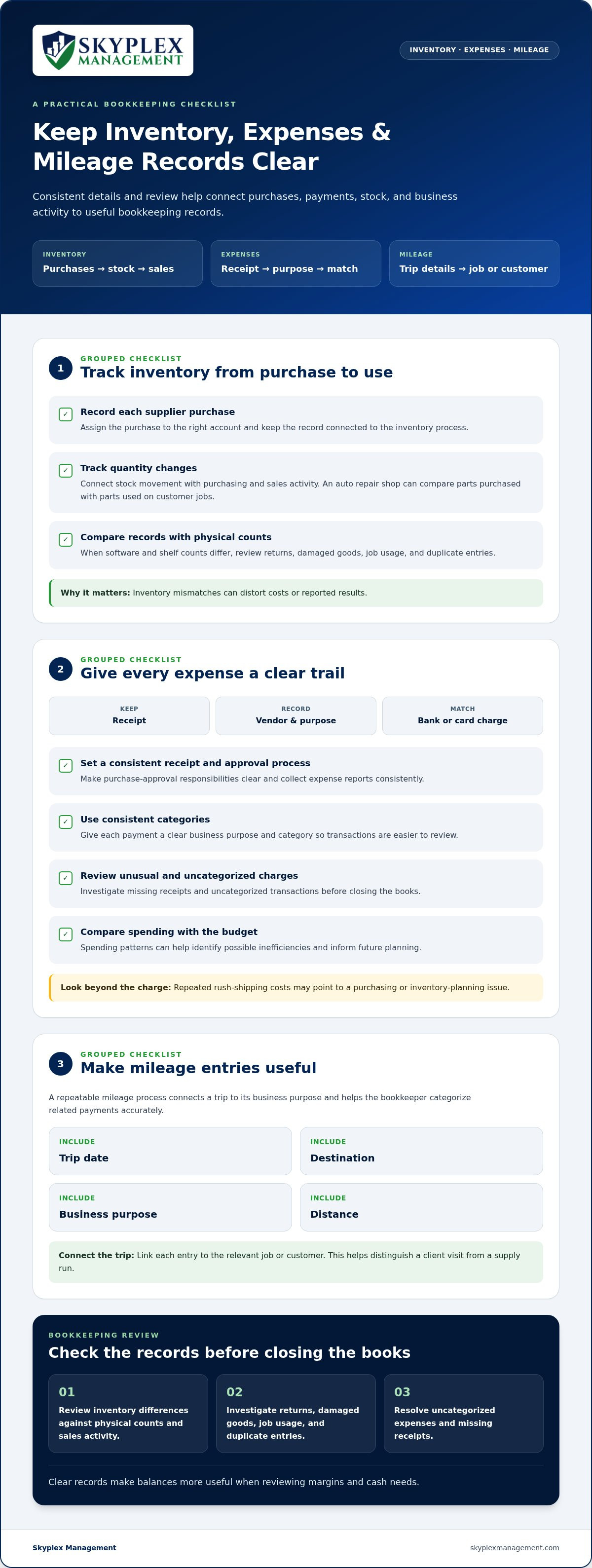
Inventory records connect purchasing, stock on hand, and sales revenue. A bookkeeping process can record each supplier purchase, assign it to the right account, and track quantity changes. For example, an auto repair shop can compare parts purchased with parts used on customer jobs. This structure helps owners investigate mismatches before they distort costs or reported results.
Expense monitoring works best when each payment has a clear business purpose and category. A bookkeeping provider may coordinate with department managers to approve purchases and collect expense reports. A practical process is to submit the receipt, record the vendor and purpose, then match the payment to the bank or card transaction. A fuel charge, for instance, needs enough detail to distinguish business travel from other spending.
Real-time expense tracking means entering or importing transactions as they occur instead of waiting for records to pile up. The workflow depends on the accounting software and how employees submit receipts. A manager might review a purchase request before payment, while the bookkeeper later confirms the transaction and supporting receipt. Timely entry gives decision-makers a clearer view of spending, though a live feed still needs review for accurate categorization.
Useful expense controls include consistent categories, clear approval responsibilities, and regular reviews of unusual charges. A business can compare current spending with its budget to spot possible inefficiencies and inform future planning. For example, repeated rush-shipping charges may point to a purchasing or inventory planning issue, not merely a bookkeeping error.
Mileage records also benefit from a repeatable process. Employees can submit trip dates, destinations, business purposes, and distances, then connect each entry to the relevant job or customer. A service company, for example, can distinguish a client visit from a supply run. Keeping these details together makes expense reviews clearer and helps the bookkeeper categorize related payments accurately.
For inventory, reconcile purchase records with physical counts and sales activity. If the software shows more parts than the shelf contains, review returns, damaged goods, job usage, and duplicate entries. For expenses, investigate uncategorized transactions and missing receipts before closing the books. These checks help keep balances useful for reviewing margins and cash needs.
- Set a consistent receipt-submission and purchase-approval process.
- Record mileage with the trip’s purpose and related customer or job.
- Review inventory differences and uncategorized expenses during bookkeeping.
If expenses or stock records are difficult to follow, you can discuss your bookkeeping questions and the records you want to organize.
Payroll services and payroll support
Payroll support connects employee pay records with the company’s books. A bookkeeping provider may calculate payroll from approved hours and pay details, record payroll expenses, and organize related transactions. For example, a service business can use consistent records to distinguish wages from contractor payments and other operating costs.
Bookkeeping and payroll services work best when information flows between payroll records and accounting software. Each pay run affects cash, wage expenses, and amounts withheld. Recording those entries in the proper accounts helps owners review labor costs alongside revenue instead of treating payroll as a separate island.
A full-charge bookkeeper may manage payroll, handle deposits, prepare financial reports, and manage sales taxes, quarterly taxes, and withholding. Responsibilities depend on the agreed scope. Owners should understand who approves pay details, who processes payroll, and who reviews the resulting entries. Clear handoffs help prevent duplicate entries or missed transactions.
Payroll deposits need to be coordinated with cash planning. Before a scheduled payment, the business can review approved payroll totals and expected account balances. The bookkeeper can record the payment and related payroll liabilities, then reconcile those entries against bank activity. This makes it easier to trace differences between payroll reports and cash records.
Payroll reports give owners a working view of gross pay, deductions, employer costs, and net payments. A monthly bookkeeping review can compare those reports with the general ledger, the main record of categorized financial activity. If an employee’s pay appears twice in the ledger, the reviewer can trace the entries to the payroll report and bank transaction, then correct the duplicate.
How much do bookkeeping services cost in the United States? Pricing depends on the business and is provided after a quote request. Factors include employee count, pay frequency, record condition, software integration, and the responsibilities included. A business with irregular hours or multiple pay categories may need a different workflow than one with straightforward salaries.
Before starting payroll support, gather employee pay details, approved hours, prior payroll reports, and deposit records. Then agree on the review and approval steps, payment dates, and how corrections will be communicated. Using one process to submit changes reduces last-minute confusion and gives the bookkeeper a consistent record to enter.
For businesses that want payroll connected to organized accounting records, payroll service support can bring these tasks into a clearer process. If you’re sorting out payroll records or responsibilities, you can discuss your payroll bookkeeping needs.
Outsourcing and full-service bookkeeping
Outsourcing can bring recurring bookkeeping tasks into one coordinated process instead of leaving them scattered across staff and software. A provider may categorize income and transactions from payroll, payment processors, and expenses, then prepare financial statements for owners, business partners, or tax work. Define which records the provider maintains and which decisions remain with your team.
A full-service arrangement may combine transaction entry, reconciliations, reporting, and budget reviews. For example, a service company can use monthly reports to compare income with operating expenses and identify cash flow pressure before planning a large purchase. A controller may review the bookkeeper’s ledger for accuracy, protect accounting data integrity, and prepare monthly financial reports.
Virtual bookkeeping can work through shared accounting software and regular document exchanges. Agree on how staff submit receipts, who answers transaction questions, and when reports are delivered. A construction business, for instance, may need costs grouped by project, while a repair shop may want labor and parts activity easy to review. Clear categories make reports more useful for operating decisions.
What risks and security protections should I consider when outsourcing bookkeeping? Key risks include excessive account access, payment changes without approval, and sensitive files shared through informal channels. Use individual logins, grant only the permissions needed, require approval for payment changes, and agree on secure document sharing and access removal when the engagement ends.
Before handing over records, map the workflow from source document to report. Identify where invoices arrive, who approves bills, how sales platforms record income, and who reviews unusual transactions. A written responsibility list can distinguish entering a bill from authorizing its payment. That separation helps preserve owner oversight while routine records move efficiently.
Ask how the provider handles corrections, reporting questions, and unusual balances. A useful monthly close process should leave a trail from report totals back to transactions and source documents. If a revenue figure changes after a correction, the reviewer should be able to explain which transaction changed and why.
Certification can be relevant, but it does not replace a clear service scope or experience with your accounting system. Bookkeeping support is distinct from tax-return preparation and filing. Specify whether the engagement includes transaction categorization, reconciliations, financial reporting, or controller review. For companies managing digital assets, specialized firms like Block3 Finance offer tailored accounting and tax support to handle complex ledgers and reporting requirements.
Outsourcing works best when the business retains decision-making authority and the provider maintains a consistent financial process. Review reports, ask about unfamiliar entries, and use cash flow information alongside operating plans. These habits turn bookkeeping from a recordkeeping handoff into a useful management resource.
Do bookkeeping firms provide bank reconciliation and monthly financial statements?
Yes, bookkeeping firms may reconcile bank statements against a business’s internal accounts and prepare financial statements. Reconciliation means comparing recorded transactions with bank activity, then investigating differences. For example, a deposit recorded in accounting software but absent from the statement may need follow-up before the books are considered current.
A useful reconciliation checks more than the ending balance. The bookkeeper matches deposits and payments, identifies bank fees, and looks for duplicate or missing entries. If a payment appears in the bank account but not the ledger, the record needs review. This process gives owners a clearer basis for understanding available cash and outstanding transactions.
Monthly financial statements typically organize results into reports that answer different questions. An income statement shows revenue and expenses over a period. A balance sheet presents assets, liabilities, and equity at a point in time. A cash flow statement summarizes cash movements, helping owners compare operating activity with account balances.
Reports are more useful when their figures connect to supporting records. A bookkeeper can trace an income statement expense to its transaction and source document. If a business sees a sudden rise in supply costs, it can review vendor activity and purchase records before deciding whether the change reflects timing, higher prices, or a recording error.
- Compare bank and credit card statement activity with recorded transactions.
- Investigate unmatched deposits, payments, fees, and duplicate entries.
- Review income, balance sheet, and cash flow reports together.
- Trace unusual report figures back to their supporting records.
A consistent monthly close gives owners a repeatable way to review reports and resolve questions. The process can include reconciling accounts, checking that key transactions are categorized, and preparing management statements. If older periods remain unreconciled, working through them in sequence helps identify when a difference first appeared.
Bookkeepers may also assist during internal reviews or IRS audits by organizing and locating relevant financial records. Their role can include connecting a reported amount with its supporting transaction, such as an invoice or payment record. Organized reconciliations and statements make that document trail easier to follow.
For an owner, the practical test is whether reports support a clear decision. A cash flow statement can help assess upcoming obligations, while an income statement can show whether a service line is generating revenue above its recorded expenses. Regular reviews can reveal questions to address before they affect planning.
Skyplex Management: Small Business Bookkeeping
Skyplex Management helps small businesses organize bookkeeping and accounting records, resolve QuickBooks Online issues, and manage payroll. If transactions have fallen behind, software records need cleanup, or payroll entries aren’t flowing clearly into the books, support can help restore a consistent process.
Small Business Bookkeeping and Small Business Accounting help maintain organized records and clearer financial information. QuickBooks Online Support & Cleanup addresses software and bookkeeping issues, while Payroll Service connects payroll activity with the business’s financial records.
Consider reaching out when bookkeeping tasks are taking time away from operations or reports aren’t giving you a clear picture of the business. Contact Skyplex Management to discuss the support that fits your bookkeeping needs.
Build a bookkeeping process that supports your next decision
The right bookkeeping arrangement should fit how your business operates, not add another disconnected task. Before choosing your next step, identify where financial work slows down: delayed transaction entry, unclear responsibilities, or reports that arrive too late to guide decisions. Then decide what to handle internally and what would benefit from consistent outside support.
Understanding what services bookkeeping companies offer can help you define the scope clearly. A focused starting point might be organizing records in your accounting software or establishing a reliable review routine. From there, shape support around the decisions you need to make and the financial information those decisions require.
Skyplex Management can discuss your bookkeeping needs and the support that fits your business.
Clear expectations create a stronger working relationship and a more useful financial process. Take the next step knowing that an organized approach can make business decisions easier to navigate.
Frequently Asked Questions
Can you help get my books up to date?
Yes, bookkeeping support can include bringing prior records up to date. Start by defining what “up to date” means for your business: the latest period you need reported, the accounts to review, and the decisions those records should support. For example, if you need financials for a lender discussion, identify the reporting period and requested reports first. This gives the cleanup work a clear goal.
What services do bookkeeping companies typically offer?
Bookkeeping companies commonly offer transaction recording, reconciliations, reporting, and related accounting support. To assess what services bookkeeping companies offer, sort your needs into recurring work, a one-time project, and decision support. Monthly transaction review is recurring; correcting a past period is project work; interpreting a report for planning is advisory support. This distinction helps you describe the outcome you need, not just a list of tasks.
Do bookkeeping companies handle accounts payable and accounts receivable?
They may, depending on the engagement. Before work begins, map who creates purchase requests, approves spending, issues customer invoices, and follows up on outstanding amounts. For example, a business may have its sales team prepare invoices but need bookkeeping support to maintain a consistent record of which customers have been billed. Clear ownership of each handoff helps prevent gaps between operations and financial records.
Can bookkeeping companies manage payroll, payroll taxes, and employee records?
Some bookkeeping engagements include payroll processing, while tax payments, filings, and employee record administration should be clearly assigned in the service scope. Agree on how changes such as a new employee, updated pay details, or a departure are communicated and documented. A consistent change-approval process helps keep payroll information aligned with business records and makes responsibilities clear.
Do bookkeeping companies offer catch-up bookkeeping and cleanup services?
Yes, catch-up and cleanup work can be a separate project or the first phase of ongoing bookkeeping. Before work starts, agree on the intended result, such as usable reports through a specified period or a clean transition into a regular close routine. Avoid deleting old entries simply because they look unfamiliar; review their source and effect first to preserve useful context for later decisions.
What software and cloud accounting platforms do bookkeeping firms support?
Platform support varies by firm, so name your current accounting system and the business tools that feed information into it. Then identify the reports you rely on and who needs access. Skyplex Management provides QuickBooks Online support. Businesses in Cleveland, Akron, Medina, Strongsville, Brecksville, Hudson, Stow, Cuyahoga Falls, Fairlawn, Brunswick, Wadsworth, North Royalton, Canton, Wooster, Richfield, Macedonia, Broadview Heights, and Solon can use this information to frame their software-support needs.
Disclaimer
The information provided in this article is for general educational purposes only and should not be considered accounting, tax, or legal advice. Every business is unique. Consult a qualified accounting professional before making financial or tax decisions. Contact Skyplex Management for guidance specific to your business.


