
What if your bookkeeping backlog is hiding more than a few missing transactions? When accounts aren’t reconciled and expenses are miscategorized, it’s hard to trust your balances or see how the business is performing. Catch-up bookkeeping services organize historical records and reconcile accounts through an agreed period, giving you clearer financial information to work with.
Records may be spread across bank accounts, accounting software, email, and paper files. You don’t need to sort through everything perfectly before getting help. This article explains what catch-up bookkeeping involves, which records to gather, and how to move from a backlog to consistent monthly bookkeeping. You’ll also learn how to assess the scope of the work and avoid shortcuts that can make records less reliable.
Key Takeaways
- Catch-up bookkeeping services organize and reconcile past records through an agreed period, creating a clearer picture of your business finances.
- The work typically moves from reviewing records and setting scope to organizing transactions, reconciling accounts, and preparing useful reports.
- The date range, number of accounts, transaction volume, and completeness of your records all affect the scope of a catch-up project.
- Gather bank and credit card statements, bookkeeping access, receipts, and payroll records, but don’t let minor gaps keep you from getting started.
- Once historical records are current, regular monthly bookkeeping and reporting can help you stay informed and avoid another backlog.
When Does a Small Business Need Catch-Up Bookkeeping Services?
Catch-up bookkeeping organizes and reconciles historical records through an agreed period. It differs from recurring monthly bookkeeping, which keeps current transactions organized and accounts reconciled as the business operates. It’s also more than entering transactions. Historical cleanup can involve reviewing records, identifying gaps, and resolving differences before reports are ready to use.
Common signs of a backlog include unreconciled bank or credit card accounts, missing statements, and reports that haven’t been updated or don’t match account records. If past balances are unreliable, it’s harder to assess available cash, understand expenses, or decide whether the business can take on a new commitment. Catch-up work establishes a clearer starting point. Skyplex Management provides small business bookkeeping support to organize records and make financial information more useful.
Consistent bookkeeping supports clear financial reporting. For background on formal accounting standards that inform financial reporting, see Generally Accepted Accounting Principles (GAAP).
What Counts as a Bookkeeping Backlog?
A backlog may cover several months or a longer period. Its scope depends on more than the date range: transaction volume, the number of accounts, and the condition of the records also matter. For example, an owner may see money in the bank but be unsure of the true balance because deposits, payments, or transfers haven’t been recorded or matched to statements. Until the account is reconciled, that balance may not be a sound basis for decisions.
Why Do Businesses Fall Behind on Their Books?
Bookkeeping can slip while an owner manages daily operations, during rapid growth, after a staff change, or when recordkeeping routines become inconsistent. Statements may be stored in different places, and transaction descriptions may not explain what a purchase was for. Those gaps can require more review, but they don’t mean the records can’t be organized. A defined catch-up period and a practical review process make the backlog manageable.
- Unreconciled accounts: Bookkeeping balances haven’t been compared with account statements.
- Missing records: Statements, receipts, or transaction details are incomplete or difficult to locate.
- Outdated reports: Reports don’t reflect recent business activity, limiting their usefulness for planning.
These signs can help you decide whether historical cleanup is a useful first step before returning to a steady monthly bookkeeping routine.
How Catch-Up Bookkeeping Services Restore Historical Records
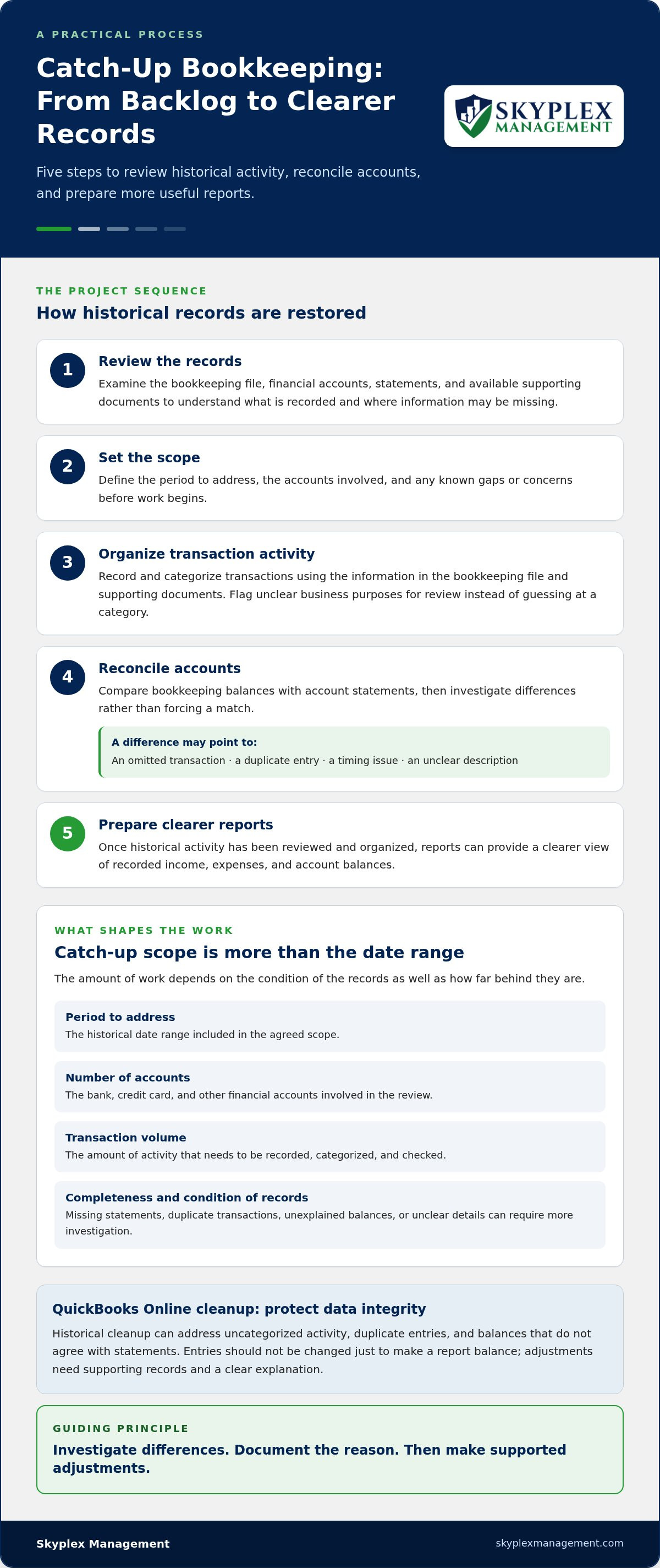
Catch-up bookkeeping services work best as a structured review, not a quick attempt to make reports look current. The process typically follows these steps:
- Review: Examine the bookkeeping file, financial accounts, statements, and available supporting records.
- Set the scope: Define the period to address, the accounts involved, and any known gaps or concerns.
- Organize activity: Record and categorize transactions using information in the file and supporting documents.
- Reconcile: Compare bookkeeping balances with account statements, then investigate differences instead of forcing a match.
- Report: Prepare clearer financial reports based on the records reviewed and organized.
Reconciliation checks whether transactions and balances in the books agree with statements from banks or other financial accounts. A difference might come from an omitted transaction, a duplicate entry, a timing issue, or an unclear description. Identify the cause before adjusting the records.
What Happens During a Catch-Up Bookkeeping Project?
The review compares the bookkeeping file with statements and available receipts, invoices, and other supporting records. Transactions can then be categorized and accounts reconciled based on the documentation. If a purchase description doesn’t explain its business purpose, flag it for review rather than assigning a category by guesswork. Once historical activity has been reviewed and organized, reports can provide a clearer view of recorded income, expenses, and account balances.
How Are QuickBooks Online Errors and Discrepancies Handled?
QuickBooks Online cleanup can address historical organization and data-integrity issues, including uncategorized activity, duplicate entries, and balances that don’t agree with statements. The goal isn’t to change an entry just to make a report balance. Prior-period entries and account balances need context, and adjustments should be supported by records and a clear explanation. Skyplex Management provides bookkeeping and QuickBooks Online cleanup to bring historical files into a more organized state.
Reliable records also depend on consistent bookkeeping after the cleanup. The Forbes guide to small business bookkeeping offers additional background on maintaining business records. With a clear historical starting point, regular review can help keep new activity organized and reports useful.
If discrepancies or incomplete records are making it difficult to establish a dependable starting point, contact Skyplex Management about catch-up bookkeeping.
How to Assess Catch-Up Bookkeeping Scope and Avoid Common Mistakes
The amount of catch-up work depends on the condition of the records, not just how far behind they are. A business with a clear bookkeeping file, complete statements, and a limited number of accounts may need a more straightforward review. Missing statements, duplicate transactions, unexplained balances, or unclear transaction details can require more investigation.
Incomplete records don’t automatically make cleanup impossible. They do affect what can be verified and may leave some items unresolved until supporting information is available. The IRS explains the importance of keeping good records to monitor business progress and prepare financial information. During catch-up work, tracking what’s available and what still needs support clarifies the scope without filling gaps with assumptions.
What Factors Affect the Amount of Catch-Up Work?
Four factors help define the work: the date range, number of financial accounts, transaction volume, and record completeness. A short period with complete bank and credit card statements may be relatively direct to review. A longer period across several accounts can involve more transactions to organize and reconcile. Missing statements, duplicate entries, and charges with vague descriptions call for closer examination. Document unresolved items for follow-up instead of assigning explanations or categories without evidence.
Which Mistakes Can Make a Backlog Harder to Resolve?
Trying to make the books look clean before understanding the transactions can create more work. Avoid these shortcuts:
- Deleting old transactions: An entry that looks duplicated may represent a separate payment or transfer. Review it against source records before changing it.
- Posting unsupported adjustments: An adjusting entry changes an account balance. Without a clear reason and supporting information, it can hide rather than resolve a discrepancy.
- Mixing personal and business activity: Transactions through a shared account can take extra review to identify and classify correctly.
- Entering records twice: Adding transactions manually when they’re already in the bookkeeping file can create duplicates. Preserve statements and receipts, and check existing entries before adding more.
These cautions matter when records are incomplete or account balances don’t agree. A careful review distinguishes what can be supported from what needs follow-up. That gives catch-up bookkeeping services a clear, evidence-based scope without requiring every document to be perfectly organized before work begins.
What to Gather Before Starting Catch-Up Bookkeeping
You don’t need a perfectly complete file before getting help. Start by collecting what’s available for the period being reviewed, then note what’s missing. Grouping documents by account and month makes it easier to spot gaps without turning preparation into another project.
Which Records Help a Bookkeeper Catch Up the Books?
Gather records that show business activity and support how transactions were recorded. A useful starting set includes:
- Bank and credit card statements: Include statements for each business account and each period in scope. If one is missing, note the account and month rather than trying to recreate it from memory.
- Receipts and invoices: Collect available purchase receipts, customer invoices, and other documents that explain unclear transactions.
- Loan details: Include loan statements or schedules that help explain payments and outstanding balances.
- Prior bookkeeping reports: Save existing profit and loss reports, balance sheets, and other reports, even if you’re unsure they’re accurate. They can provide context for review.
- Payroll summaries: Include payroll records for the periods being reviewed when payroll activity affects the books.
Use folders labeled by account and period, or make a simple list showing which statements and supporting records you have. This makes missing items visible and helps focus follow-up on the records that matter.
How Can Owners Prepare QuickBooks Online Access and Context?
Provide access to the existing QuickBooks Online file through an appropriate secure process. Don’t send passwords in ordinary email. Also prepare a short note about changes that could affect the review, such as opening or closing an account, adding a payment processor, a change in ownership, or a change in bookkeeping methods.
List transactions you already know may need explanation, along with questions about unfamiliar entries. A note such as “This deposit includes several customer payments” gives useful context without guessing how each transaction should be recorded. If a statement or receipt is missing, identify it and keep organizing the records you do have. Small gaps shouldn’t keep you from getting started with Skyplex Management’s bookkeeping services.
Skyplex Management supports small businesses in Northeast Ohio, including Cleveland, Akron, Medina, Strongsville, Brecksville, Hudson, Stow, Cuyahoga Falls, Fairlawn, Brunswick, Wadsworth, North Royalton, Canton, Wooster, Richfield, Macedonia, Broadview Heights, and Solon. Organizing documents by account and period, with notes about known changes, helps focus the review.
From Catch-Up Bookkeeping to Reliable Monthly Records with Skyplex Management
Once historical records have been reviewed and brought current, the business has a more dependable starting point for ongoing bookkeeping. Catch-up bookkeeping services address the backlog; monthly bookkeeping keeps new activity organized so the same gaps don’t build up again. That transition also gives you a clearer basis for understanding what’s happening in the business.
A regular routine can include recording and categorizing activity, reviewing account statements, reconciling balances, and preparing financial reports. Reconciliation helps identify differences while the related activity is easier to trace. Current reports provide a more timely view of income, expenses, and cash activity, helping owners make operating decisions with better information.
How Does Monthly Bookkeeping Help Prevent Another Backlog?
Consistency matters more than waiting until every record is perfect. A recurring review gives transactions a regular place in the bookkeeping process and brings questions to the surface before they accumulate. Skyplex Management’s monthly bookkeeping can be paired with QuickBooks Online support, payroll services, and financial reporting and advisory support, based on the business’s needs.
For example, an owner who reviews reports only when a major decision comes up may first discover that account balances or expense categories need attention. Regular reconciliations and reporting make it easier to spot changes in business activity and follow up on unclear items as part of the routine.
What Can Northeast Ohio Owners Expect from Ongoing Support?
Skyplex Management provides bookkeeping support to small businesses across Northeast Ohio, including Cleveland, Akron, and Medina. Ongoing support helps owners keep records organized while they focus on running the business. With QuickBooks Online support and cleanup, payroll services, and financial reporting available alongside bookkeeping, transaction records can connect to reports that are more useful for day-to-day planning.
A practical next step is to discuss the period that needs attention, the records you have, and what you want your bookkeeping to support going forward. You don’t need to resolve every open question before addressing the backlog. Contact Skyplex Management to discuss catch-up bookkeeping and a reliable monthly routine.
FAQs
How far back can catch-up bookkeeping go?
The period depends on the business’s needs and the records available. A catch-up project can cover several months or a longer historical period. The date range, number of accounts, transaction volume, and completeness of statements and supporting documents help define the scope.
Can bookkeeping be caught up if some records are missing?
Yes. Missing documents don’t automatically prevent cleanup from moving forward. Gather what you have, list the gaps, and flag transactions that need more context. Items that can’t yet be supported should be documented for follow-up rather than assigned an assumed category.
Should I keep using QuickBooks Online while historical records are being reviewed?
Keep new business records organized, but avoid making changes to older entries or account balances just to force a match. Note transactions you’re unsure about and preserve supporting documents. This helps distinguish current activity from historical items that need review.
What happens after the catch-up work is complete?
Once historical records are organized and reviewed, recurring monthly bookkeeping can help keep new transactions current, accounts reconciled, and reports useful. Skyplex Management pairs bookkeeping with QuickBooks Online support and financial reporting and advisory support, helping small businesses move from a backlog to a steadier recordkeeping routine.
Disclaimer
The information provided in this article is for general educational purposes only and should not be considered accounting, tax, or legal advice. Every business is unique. Consult a qualified accounting professional before making financial or tax decisions. Contact Skyplex Management for guidance specific to your business.


