
Professional Bookkeeping: What Small Businesses Should Expect in 2026 What if bookkeeping could do more than explain where last month’s money went? A consistent process can also show what needs attention now, before incomplete records or delayed reports complicate everyday decisions. Entering transactions and organizing receipts are important, but they are only part of the work.
For a small business, professional bookkeeping is a repeatable financial process: transactions are recorded, accounts are reconciled, payroll activity is organized, and timely reports help make the records useful. When your books are current, you can review cash flow, spending, and business priorities with greater clarity.
This article explains what ongoing bookkeeping should cover in 2026, how QuickBooks Online support and payroll can fit into a coordinated workflow, and how reports can inform day-to-day decisions. You’ll also find practical signs that additional support could make financial tasks easier to manage. For Northeast Ohio businesses, Skyplex Management connects routine bookkeeping with reporting and advisory support.
Key Takeaways
- Learn how professional bookkeeping turns routine recordkeeping into a consistent process for reviewing business finances.
- See the steps in a monthly bookkeeping workflow, from gathering source records to preparing reports.
- Compare DIY records with professional support to recognize when your current process may need attention.
- Use a practical preparation list to organize account access, financial records, and payroll information.
- Explore how Skyplex Management supports Northeast Ohio businesses with bookkeeping, QuickBooks Online, payroll, and financial reporting.
What Professional Bookkeeping Means for a Small Business
Invoices, receipts, bank activity, and payroll records can pile up when customer work and daily operations take priority. The challenge isn’t just the number of transactions. It’s keeping them organized so you can understand what happened and rely on the records when you need them. For a small business, professional bookkeeping is a consistent process for recording, classifying, and reviewing financial activity.
Bookkeeping organizes the information behind your business finances. It can include recording sales and expenses, maintaining supporting documents, and reconciling accounts. Reconciliation means comparing your records with bank or credit card statements and resolving differences, such as a missing transaction or an amount that doesn’t match. As a foundational overview, Bookkeeping describes the role of recording financial transactions. The practical goal is to keep records orderly enough to support useful reports and informed decisions.
Bookkeeping is not an audit. It organizes and reviews financial records as part of an ongoing business process, but it does not provide an independent audit or assurance opinion. Hiring bookkeeping support is also different from pursuing bookkeeper training or certification. A course or credential relates to an individual’s education; a bookkeeping service helps a business maintain its financial records.
How professional bookkeeping differs from occasional data entry
Entering transactions in batches when time allows may put information into accounting software, but important details can still be missing. A purchase may lack a receipt, a deposit may be categorized incorrectly, or a bank transaction may not match the books. A repeatable process gives each item a place, links activity to available source documents, and includes regular account reconciliation.
Consistent review helps surface questions while the details are still easy to find. For example, if a card purchase has no clear description, it can be flagged for clarification rather than left in a vague category. Clear records make later reporting easier to understand and review.
What professional bookkeeping can help an owner understand
Organized records help show where income came from, what the business spent, and how activity changed over a reporting period. Before relying on a report, check the dates it covers and whether the related transactions have been recorded and accounts reconciled. A report prepared with missing or unreconciled activity may not show the full picture.
Professional bookkeeping is an ongoing business process that turns financial activity into organized records owners can use to understand and manage their operations. Skyplex Management’s monthly bookkeeping services connect consistent recordkeeping with financial reporting, giving owners a more dependable foundation for day-to-day decisions.
What a Professional Bookkeeping Workflow Covers Each Month
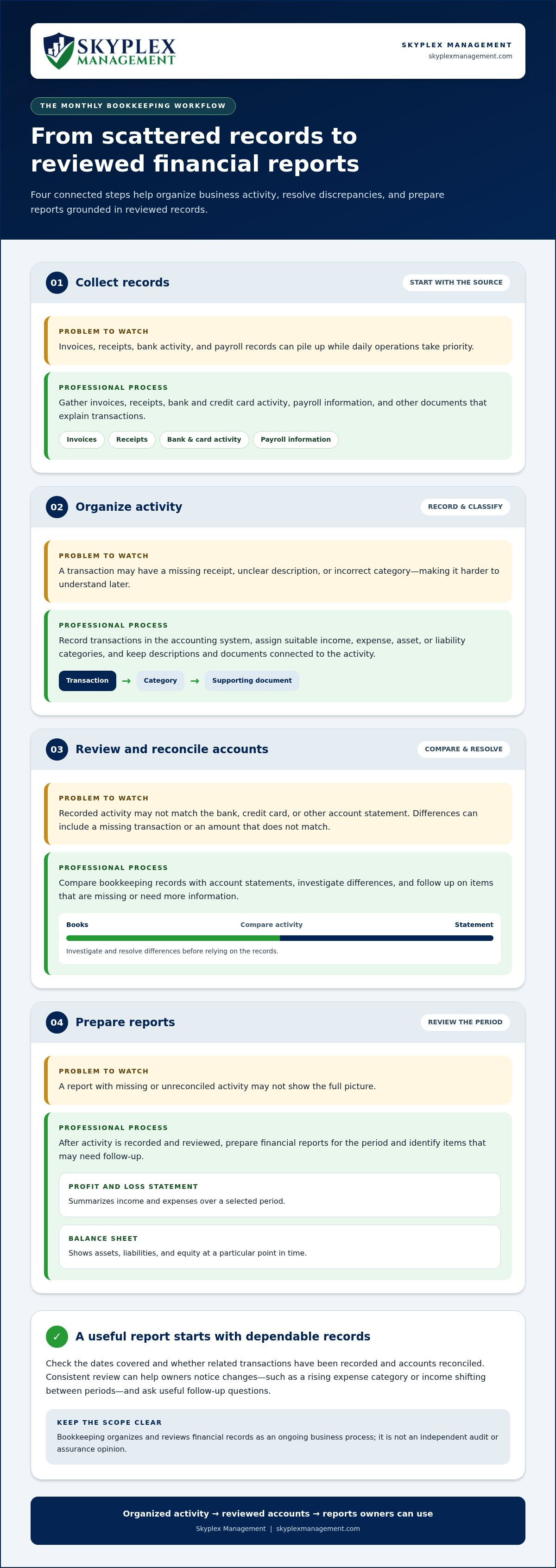
A dependable monthly process moves financial information from scattered records to reports that are easier to use. The tasks and timing depend on how your business operates, which records are available, and what financial activity needs attention. A professional bookkeeping workflow typically follows four connected steps:
- Collect records. Gather invoices, receipts, bank and credit card activity, payroll information, and other documents that explain business transactions.
- Organize activity. Record transactions in the accounting system and assign them to suitable income, expense, asset, or liability categories. Clear descriptions and supporting documents make entries easier to understand later.
- Review and reconcile accounts. Compare bookkeeping records with bank, credit card, and other account statements. Investigate differences, missing transactions, or items that need more information.
- Prepare reports. Once activity is recorded and reviewed, prepare financial reports for the period and identify items that may need follow-up.
From transaction records to reviewed accounts
Collecting records involves more than gathering files. An invoice can explain a customer deposit, while a receipt can clarify the purpose of a card purchase. Keeping these documents with the related transactions makes the books easier to understand and supports a more consistent review.
Reconciliation means comparing transactions recorded in the books with activity shown on an account statement, then resolving differences. QuickBooks Online support can help maintain useful accounting records by addressing setup, categorization, and data issues as part of the workflow. For a general overview of bookkeeping practices, see this Small Business Bookkeeping Guide.
How monthly reports turn bookkeeping into useful information
A profit and loss statement summarizes income and expenses over a selected period. A balance sheet shows assets, liabilities, and equity at a particular point in time. Neither report answers every business question on its own. Reviewing them consistently can help you notice changes, such as a rising expense category or income shifting between periods, and ask useful follow-up questions.
Reports are only as useful as the records behind them: organized, reviewed transactions provide a clearer foundation for understanding business activity. Owners who want a more consistent process can explore monthly bookkeeping support from Skyplex Management. To discuss how a workflow could fit your business, contact Skyplex Management.
Professional Bookkeeping vs. DIY Records: What Changes for Owners?
Handling your own books can work well when transactions are manageable and you have a consistent routine. Professional support can be useful when recordkeeping competes with customer service, payroll, or other essential work. The choice isn’t all-or-nothing. Consider whether your current process produces records you can understand and use, and whether you have time to keep it up.
| Area | DIY recordkeeping | Professional support |
|---|---|---|
| Consistency | The owner enters activity as time allows. | A recurring process keeps records organized and current. |
| Review | The owner checks entries and resolves questions. | A bookkeeper reviews records and flags items needing clarification. |
| Reporting | Reports depend on the owner’s entries and review. | Organized records support reports prepared for an agreed period. |
| Owner involvement | The owner manages routine bookkeeping tasks directly. | The owner provides business context and retains decision-making responsibility. |
Signs your current bookkeeping process needs more structure
Look for recurring problems, not just a single busy month. Bank or credit card activity may remain unreconciled, account balances may be difficult to explain, or you may avoid reports because you’re unsure whether they’re complete. Repeated corrections to the same types of transactions can also make financial information harder to rely on.
A temporary backlog can often be addressed by organizing outstanding records and updating the books. If transactions continue to fall behind after the backlog is cleared, look at the ongoing workflow: responsibilities, record collection, or review steps may need more structure.
What professional support adds beyond basic software use
Accounting software stores and displays financial information, but it can’t replace a clear process for organizing records, reviewing entries, and investigating unclear activity. As Forbes explains in its overview of bookkeeping basics for small businesses, maintaining financial records involves more than having a place to enter transactions.
QuickBooks Online support can address setup or data issues that make records difficult to maintain. Cleanup may be useful when historical entries, uncategorized transactions, or account balances need review before an ongoing process can work smoothly. Skyplex Management’s small business accounting services connect that support with regular bookkeeping and reporting.
Professional bookkeeping doesn’t remove the owner from financial oversight. It helps make information more organized, while the owner remains responsible for interpreting business priorities and deciding what actions to take.
How Northeast Ohio Businesses Can Prepare for Professional Bookkeeping
A little preparation can make it easier to understand your current books and establish a workable process. You don’t need to create a perfect file before getting help. Gather what you have, note what’s missing, and be ready to explain how money moves through your business. Business owners in Cleveland, Akron, Medina, and nearby Northeast Ohio communities can use the same practical approach.
Records and access to organize before support begins
Start with the records and tools that reflect your actual operations. Depending on your business, useful items may include:
- Recent bank and credit card statements, along with invoices, receipts, and transaction records.
- Payroll records and information about how payroll activity is recorded.
- Access to your current accounting software, such as QuickBooks Online, and a note of any setup or data concerns.
- A short list of questions, unclear balances, recurring corrections, or steps that routinely get delayed.
This isn’t a universal document checklist. A business with employees may need to focus on payroll records, while an owner-operated business may have different records and priorities. The goal is to provide enough context to understand the records, identify gaps, and shape a process around your needs. Keep account access secure and use appropriate access controls rather than sharing personal passwords.
Why bookkeeping details differ across local industries
Financial activity follows the way a business operates. A construction company may need records organized so owners can understand costs and activity by job. An auto repair shop may need clear records for customer work, parts purchases, and payments. A service business may focus on connecting invoices, customer payments, and operating expenses to the right period. These examples illustrate different bookkeeping patterns, not additional tax rules.
A useful bookkeeping workflow reflects how the business earns, spends, and tracks money, rather than forcing every company into the same routine. Questions about job tracking, parts, customer deposits, payroll, or delayed paperwork help clarify what information owners need and where the process may be breaking down.
For Northeast Ohio business owners, preparing these details can make an initial conversation about professional bookkeeping more focused. Skyplex Management supports small businesses with bookkeeping and related financial services tailored to their records and operating needs.
How Skyplex Management Supports Professional Bookkeeping
Skyplex Management works with small businesses across Northeast Ohio, connecting routine bookkeeping with practical financial support. Whether you’re reviewing an established process or bringing scattered records up to date, the starting point is understanding how your business operates and what information you need from your books.
Connecting bookkeeping with software, payroll, and reporting
Monthly bookkeeping creates a consistent rhythm for organizing and reviewing transactions. Skyplex supports that work with QuickBooks Online setup, ongoing support, and historical cleanup, helping keep software records aligned with business activity. Payroll management can also fit into the broader financial workflow, while tailored financial reporting helps owners review income, expenses, and other activity in a useful way.
For businesses that need broader financial oversight, outsourced accounting and controller services can complement bookkeeping and reporting. These services support organized financial operations, while owners remain responsible for business decisions. The process can be shaped around your records, accounting software, payroll workflow, and reporting priorities.
Skyplex’s monthly bookkeeping services connect day-to-day recordkeeping with related small business financial support.
Start a practical conversation about your bookkeeping
You don’t need to have every record perfectly organized before discussing support. Share your business type, how you manage bookkeeping now, which records are current, and where you’re running into difficulty. It also helps to describe the reports you want to understand or the financial details you need to review regularly.
That context makes it easier to discuss a sensible starting point, whether you’re addressing older transactions, improving an ongoing workflow, or considering broader accounting support. The goal is an approach that fits your business rather than a one-size-fits-all routine.
If you’re ready to discuss your current workflow and reporting needs, contact Skyplex Management to discuss your bookkeeping needs.
Build a Bookkeeping Process You Can Rely On
Professional bookkeeping works best as a consistent process, not a last-minute effort to enter transactions. Organized records, regular review, and reports prepared from current information give owners a clearer view of business activity. A useful workflow also reflects how your business operates, so the records help answer your questions instead of adding confusion.
DIY bookkeeping can remain a good fit when your process is manageable and your records are clear. If transactions regularly fall behind, balances are difficult to explain, or reports go unused, added support can help establish a steadier routine. Skyplex Management specializes in bookkeeping and accounting for small businesses across Northeast Ohio, with related QuickBooks Online support, payroll management, and financial reporting.
Share your business type, current bookkeeping process, and the financial information you’d like to understand more clearly. That’s a practical starting point for discussing support that fits your needs.
With organized records and dependable support, you can approach everyday financial decisions with greater clarity and focus on running your business.
Frequently Asked Questions
What does professional bookkeeping include?
Professional bookkeeping typically includes organizing financial records, categorizing transactions, reviewing accounts, and preparing reports. The scope depends on your business’s records and needs. For example, a bookkeeper may compare recorded bank activity with statements and investigate differences. Bookkeeping support isn’t an audit or tax return preparation, and it doesn’t make financial decisions for you. Consistent records help owners understand business activity and review financial information with greater clarity.
Is professional bookkeeping different from accounting?
Yes. Bookkeeping primarily organizes and maintains financial records, while accounting can include broader interpretation, oversight, and reporting. The division of work can vary by business and service arrangement, so the terms aren’t identical in every context. Skyplex Management provides bookkeeping and accounting support for small businesses. Consider whether you need help maintaining records, understanding reports, or improving a financial workflow, then discuss the appropriate scope of support for your operations.
Can a small business use professional bookkeeping with QuickBooks Online?
Yes. QuickBooks Online is accounting software, and professional support can help organize its records, address setup or historical cleanup needs, and maintain useful financial information. Using software alone doesn’t establish that records are complete or accurate. Skyplex Management provides QuickBooks Online support and cleanup. The right level of assistance depends on your setup, records, and workflow, so businesses don’t all need the same approach.
How often should a small business have its books reviewed?
A regular monthly review can help keep records current and support timely reports, but the right schedule depends on your business. Transaction volume, payroll activity, and operating needs can all affect the workflow. A business with frequent transactions may need a different process from one with simpler activity. Review how quickly your records are collected and what reports you need, then establish a routine that fits your operations.
Do professional bookkeepers handle payroll and financial reporting?
Bookkeeping, payroll, and financial reporting are related but distinct service areas, and what’s included depends on the service arrangement. Skyplex Management provides payroll management and tailored financial reporting alongside bookkeeping. Coordinating these activities can connect payroll information with business records and give owners reports to review. Reports provide financial information, but they don’t guarantee a particular result or replace the owner’s judgment when making business decisions.
What should I prepare before starting professional bookkeeping services?
Gather available bank statements, transaction records, payroll information, accounting software access, and questions about the reports you need. This is a helpful starting point, not a universal document requirement. Begin with the records you have and note what’s missing or difficult to explain. Your business type and workflow shape what’s most relevant, so share recurring delays or unclear balances with your bookkeeping support team.
Does professional bookkeeping make sense for a Northeast Ohio small business?
Location alone doesn’t determine whether professional bookkeeping is a good fit. Consider whether records stay current, reports help you understand business activity, and you have time to maintain the process. Skyplex Management serves businesses in Cleveland, Akron, Medina, Strongsville, Brecksville, Hudson, Stow, Cuyahoga Falls, Fairlawn, Brunswick, Wadsworth, North Royalton, Canton, Wooster, Richfield, Macedonia, Broadview Heights, and Solon. Local owners can discuss their bookkeeping workflow and reporting needs with the firm.
Disclaimer
The information provided in this article is for general educational purposes only and should not be considered accounting, tax, or legal advice. Every business is unique. Consult a qualified accounting professional before making financial or tax decisions. Contact Skyplex Management for guidance specific to your business.


